Tuesday, March 7, 2023

March 2023

March 30th 1120 GMT Sun

It now seems that April showers have now moved to March, with recent climate change. Despite a very wet and cloudy morning, there was a clear spell at lunchtime. With a bad back and hips, I was unable to carry my telescope, so a binocular scan it was and I saw two sunspots, rather down from previous days. Still, at the time, I was grateful to get a look at anything outside Earth’s atmosphere.


March 27th 1915 GMT Moon and Mars

The moon was close to Mars in the dusk sky. I zoomed in ten times on my phone camera but left the other settings at default. I was not happy with the presentation of the Moon but it was nice to capture something on my camera phone, despite my residual cynicism about them.


March 26th 1910 GMT Moon and Venus


This was my first astronomical session since the change to British Summer Time. The day had been cloudy, wet and windy but, at dusk, I walked our dog and saw the waxing crescent moon. Venus joined in the view, too. It was a while before I got outside. I started with the Moon with my Mak and DSLR at 1.54 metres focal length, ISO 100 and 1/100 second exposure. I took a few shots, with the idea of stacking five of them.


I made an amusing mistake when going in for close-ups. I connected my camera to my Barlow lens, to reach a focal length of 4.62 metres. However, I forgot to take the lower lens cap off before inserting the assembly into the telescope! I got past that and set the exposure to 1/20 second and shot away, taking sets of shots, with the intention of stacking them. Some stacks worked, others didn't and the results were not as good as I hoped.


I moved on to Venus, which had started to shine brightly. Through the viewfinder, I saw a gibbous eyeball shape, not unknown when viewing Venus. I have noticed that the phases of Venus are not necessarily the same as the Moon.


Cloud had started to roll in again. It had not been a prolific weekend for astronomy and astrophotography but it was better than a complete whiteout and I was looking forward to processing and posting the images later in the week.


March 25th 1120 GMT Sun

I could say that this was rather strange. Despite the weather forecast, there were a couple of clear spells. Unfortunately, the first one did not last long enough to get my telescope outside but I left it assembled in the hope that I might get a second clear spell.

I had some false alarms but I had enough time to get a set of shots of the full disc at 1.54 metres focal length, ISO 100 and 1/500 second exposure. Some photos were ruined by cloud but I managed to stack five of them in Autostakkert and finished in GIMP. The result showed that, although I could capture sunspots in binoculars, I could get a much better result with a half decent telescope and decent camera.


March 24th 0745 GMT Sun


I arrived at work in bright sunlight. The three sunspots from the day before had changed shape and intensity. It was amazing how the Sun could change in just 24 hours. It is why it is my favourite astronomical object.


March 23rd 0755 GMT Sun


It came to pass that, on this memorable day, the clouds parted long enough for me to see the Sun. As I was about time to start work, I aimed my binocular and filters at this rather strange, bright object that I had only seen fleetingly throughout the month. I was greeted by two large sunspots and one small one, indicating a rather active Sun. I did not see any faculae (bright spots), as I had been through my telescope but it was nice to see something after four gruelling days of hurt, since my last observation.


March 19th 1020 GMT Sun

March was turning out to be somewhat of a washout, whiteout and greyout, with very little opportunity to see or photograph anything in the sky. A brief spell of sunlight enabled me to do as solar shoot, on my birthday. I stacked 5 images to get a decent full solar disc. All of the activity was on a small part of the Sun, having rotated on from the far side.


I gave my optics a good clean before taking a close-up of the active region. I made the awful mistake of under-exposing the shots, forgetting to increase the exposure time from 1/500 to 1/50 second. This was probably why the images didn't stack. Instead, I processed a single frame and the dust motes were far enough away from the active region. Underexposure, well, yes, but processing gave a nice view of the sunspots and faculae.


March 14th 1650 GMT Sun


There was a clear spell of sky in the late afternoon leading up to sunset. I had not been out for a while, mostly due to weather. I could see just two small sunspots, which was 2 small sunspots more than I had seen for a week. Needless to say, despite the optimistic weather forecast, I was unable to see more than the odd star winning a short battle with the clouds but losing the war.


March 7th 2050 GMT Moon
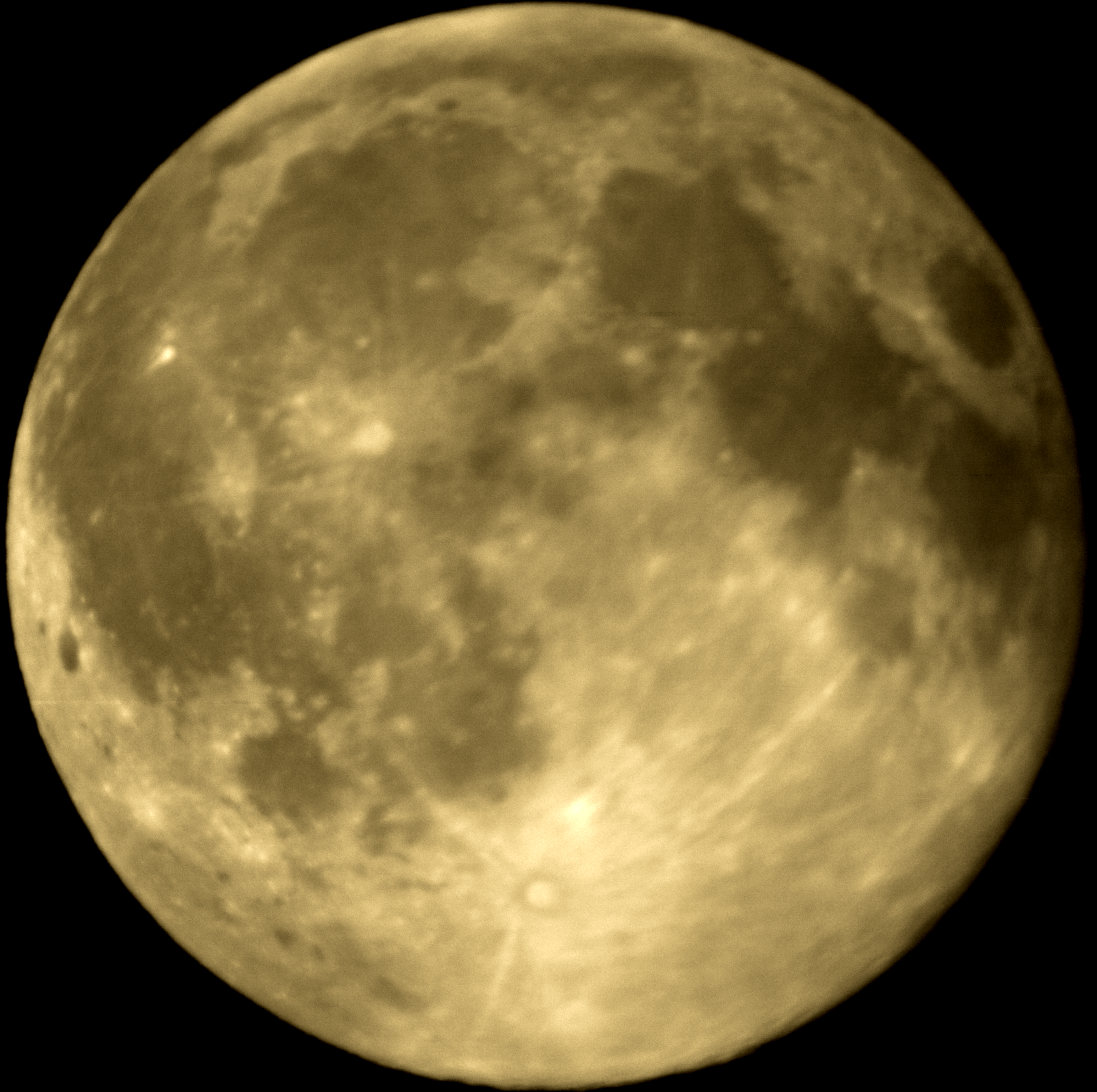
There are times when I doubt my own sanity but, considering multiverse theories, there must be a large but finite pasts, presents and futures, where, indeed, I go mad. This could be one of them. Conditions were so poor that, at no time during the photo shoot that the Moon was clear of cloud. I stacked 3 images to get a "cloudless" one.


March 7th 1950 GMT Venus and Jupiter

Venus and Jupiter had diverged since the last viewing, with Jupiter sinking towards the horizon. I used a variety of ISO settings and exposure times.


I also caught Venus, showing a slightly less than full phase at 300mm focal length, ISO 100 and 1/200 second exposure.


March 2nd 1910 GMT Venus and Jupiter

Regular readers of my blog and, indeed, my books will know that I am rather sceptical about camera phones. You will also be aware that I have made efforts to photograph the Moon that have shown the phase and no detail. Yet sometimes, we can be surprised. I reduced the ISO settings, as well as the controls allowed me to and ended up with something approaching DSLR quality, after a bit of adjustment in GIMP.


March 2nd 1630 GMT Sun


I waited until after finishing work to check the Sun though my binoculars and filter. I could see two sunspots.


Monday, February 6, 2023

February 2023

February 26th 1100 GMT Sun


The weather was slightly better this time but there was lots of moving cloud. After a few attempts I caught the Sun with my binoculars and filters and saw three sunspots, two close. I was hoping for a bit more solar action over the weekend but, with the weather being rather poor during February, I should have been a bit more grateful.


February 25th 2120 GMT Moon


The weather forecast was good but the local microclimate dictated otherwise, with plenty of cloud of all thicknesses. I snapped the Moon with my Mak and DSLR at various settings, the best seemed to be 1.54 metres focal length, ISO 100 and 1/200 second exposure.

Various stacking attempts failed, so I processed a single frame.


February 24th 2120 GMT Binocular and Photo Session

I started off by a bit of binocular scanning. I used the Moon as a focussing object. It was a waxing crescent and showed a lot of detail around the terminator. I also checked out the Pleaides and Hyades star clusters, both showing well. I found Comet 2022 E3 ZTF in northwest Orion. Spectacular it was not but it was great to see a fuzzy object, bearing in mind that comets reaching binocular brightness are not common.

I had photographed the Hyades and Pleaides with the month before and the result was OK-ish. I started off shooting darks with my DSLR at 35mm focal length, ISO1600 and 15 seconds exposure.


I did a similar shoot in the area the comet was in, the shield of Orion. It hardly showed at all but I also caught something strange to the left of Orion's belt. It was probably a slow-moving, rotating satellite, possibly geostationary, or almost.


The next shot was another stack of images of Canis Minor. The constellation was at the bottom of the photo and shows a faint star near Procyon, the brightest star in Canis Minor.


The Orion shot was worse than the day before, possibly because I had too much star trailing to the left and right. Possibly I had stacked too many frames, having seen similar problems with Deep Sky Stacker.


The final shot was of Cancer, the centre of which is marked by the Beehive star cluster. After that, clod ruined any further action.


February 23rd 2100 GMT Orion


I checked Betelguese. Despite the colour contrast, it was definitely fainter than Procyon.  My estimate was a magnitude of 0.5., showing a fade.


I took some lights and darks of Orion at 35mm focal length, ISO 1600 and 15 seconds exposure.


February 19th 1225 GMT Sun

There was thin haze around and I thought a binocular scan might produce some decent results, as in the recent past. However, I could only find two sunspots.


February 14th 1800 GMT Venus and Jupiter


Venus had started moving eastwards faster than the Sun was and was setting a bit later each evening. Jupiter was also nearby and the distance between them was decreasing.


This photo was taken using my phone camera. Although I still felt sceptical about them, at least I made a reasonable effort with this.


February 14th 1230 GMT Sun


I bin scanned the Sun in a clear sky and saw even more sunspots and a changed pattern to the day before.


February 13th 1210 GMT Sun

 I bin scanned the sunspots in clear conditions and saw four prominent ones.


February 7th 1750 GMT Jupiter and Venus


Venus and Jupiter were in the west. I snapped them individually then together. The Venus shot showed a phase change and that was all I got.


February 7th 1200 GMT Sun


The Sun had apparently awakened and it showed a few sunspots. I took some full disc frames at 1.54m focal length, ISO 100 and 1/500 second exposure. I stacked 8 images and processed the result in GIMP, showing faculae, as well as several sunspots.


February 6th 2100 GMT Moon

The Moon was in a cloudless patch of sky. I had found that the file settings that worked so well for constellation shots were not so good for other shots. I needed to use Sequator or another (unidentified) tool to convert them to TIFF so I could stack them using Autostakkert. I changed back to JPG to make stacking easier.

I took one set of shots at 1.54m focal length, ISO 100 and 1/250 second exposure to capture the full lunar disc.


I stacked other sets of shots at 4,62m focal length, ISO 100 and 1/30 second exposure to capture some close-ups of the lunar disc.

Unfortunately, the stacks did not work as they did for the full stack image, so I processed the individual images. The first one shows the walled plain Grimaldi at the bottom and the rayed crater Kepler at the top left.


The second photo shows the rayed crater Copernicus.


The third close-up shows Mare Crisium.


The fourth close-up shows the crater Tycho, a young crater a mere 114 million years old that has the largest ray system of all.


The fifth close-up shows the Sea of Tranquility, the site of the first moon landing.


The sixth and final close-up is another view of Kepler.


February 6th 1900 GMT Betelguese

The sky was mostly clear, with the Moon covered by streaks of cloud. I checked Betelguese against the usual comparison stars and it suggested a magnitude of at least 0.3 and possibly as high as 0.2.

February 5th 2050 GMT Binocular Session


It was  little over two hours since the full moon and it seemed very bright. I had not seen any claims of it being a "supermoon" but it seemed brighter than average.


The moonscape was dominated by the Ray systems of Tycho,  Copernicus and Kepler. I could not see any edge, or terminator, so could see no other craters, just the "seas" and some lava-filled plains, such as Plato and Grimaldi.


Elsewhere, there was little to see. The Orion Great Nebula showed, whereas the Pleiades star cluster showed only about a dozen of the brightest stars. The Hyades showed better. I saw the comet 2022 E3 ZTF but only a very small nucleus. Like the other objects, it appeared drowned out by moonlight.

Monday, January 2, 2023

January 2023

January 30th 2120 GMT Comet 2022 E3 ZTF


My attempts to capture the close passage of Mars and the Moon failed dismally but I managed to catch the comet on camera with my DSLR at 70mm focal length, ISO 6400 and 10 seconds exposure.


January 27th 1925 GMT Moon and Jupiter

I had to try the same shot with my phone camera. The relative brightness of the Moon and Jupiter was good but the lunar phase looked strange.


January 27th 1855 GMT Moon and Jupiter


The sky was partly clear, with thin cloud scattering moonlight. I had missed the best evening for this shot but the moon and Jupiter were within camera range and I did a quick shoot before dinner.


I set my camera to 40mm focal length, ISO 100 and tried various exposures. I then changed lenses and used 300mm focal length and various exposure times to shoot the two objects separately.

Unusually, I managed four shots in or near focus, so I stacked them to produce a composite moon shot.


Jupiter showed a hint of cloud belts, although the disc was very small.


I then followed my mission in an attempt to capture Jupiter's moons and the Orion Nebula at 300mm focal length, ISO 6400 and various exposures without a tripod! I had, after all, promised myself and my astronomical audience that I would try new things out, even if, in theory, they were not feasible! I caught a hint of a moon but Jupiter was horribly mis-shapen!

I combined the shots of Jupiter and the Moon together and separately to produce a final image.


January 24th 1715 GMT Moon and Venus


I used a conventional and reliable method of conjunction/close approach shots. I photographed the Moon and Venus each at 300mm focal length, 1/200 second exposure and ISO 100. I took one of Jupiter, well, just in case!

I did not get anything useful from the Venus shot but the moon shot was OK-ish.


I then adjusted the focal length to 70mm and caught the Moon and Venus together. I overlaid the moon shot, after resizing to get the final result.


January 24th 1205 GMT Sun


I bin scanned the sun in a clear sky. A sunspot group. that appeared as a single large sunspot to my binoculars, was close to the solar limb and about to rotate to the far side of the Sun.


January 22nd 1305 GMT Sun

 The weather was cloudy but I managed to catch a single large sunspot.


January 21st 0155 GMT Binocular Session


Unfortunately, cloud rolled in and left a haze behind. I saw Comet 2022 E3 ZTF and it appeared faint and diffuse, again looking more like a globular cluster or galaxy. No sign of a tail.


I further browsed around the sky, potting Melotte 111, Melotte 20, the Beehive (M44), M35 and Melotte 20. I also saw Epsilon and Delta Lyrae, the double stars in Lyra. Whilst I enjoyed my short session, none of the objects showed at their best. The Beehive Cluster, one of my favourites, looked best, as it was well clear of the horizon.


January 20th 1840 GMT Meteor Hunt

So after the amazing experience of seeing a comet for the first time since July 2020, it was back to the more mundane and routine activity of hunting for meteors. So, the Gamma Ursa Minorids were still active and the sparseness of the shower was demonstrated by my failure to nail a single one the evening before. Now maybe one of the many commercial rockets going into low Earth orbit could release a few marbles or pebbles to give us meteor addicts something worth seeing!

I got something but it was a UFO at 2309 GMT.


January 20th 0600 GMT Comet 2022 E3 (ZTF)


The comet name sort of rolls easily off the tongue, somewhat easier than the tongue twister Hale-Bopp. I forgot how exactly many comets I had seen but this was something between my 20th and 30th. At the time of viewing with my 15x70 binoculars, it seemed to be a faint fuzzy patch that could easily be mistaken for a galaxy or globular star cluster, except that I knew that there were none in that part of the sky. The globular cluster M3 and the galaxy M51 were further south and east. To be honest, seeing any comet at all without the use of a large telescope is an event for amateur astronomers. However, I did not expect it to inspire the general public, as NEOWISE F3 did in 2020, nor Hale-Bopp and Hyukutake in the late 1990s. Still, I could tick the box to say I’d seen it.


I also had a look at the double stars Albireo, Epsilon Lyrae and Delta Lyrae, at least one of which I would hope to photograph later in the year.


January 19th 1830 GMT Meteor Hunt


I aimed my camera at Ursa Minor again with my usual settings. I returned to the warm while hoping to get something interesting on “film”.

At 1938 GMT, I got something but it was not a meteor. Due to the faint tails to the top and bottom of the object, I had to classify it as unidentified.


At 2146 GMT, I caught another unidentified object.


A mere minute later, another unidentified object appeared.


At 2150 GMT, three minutes later, another UFO appeared. If they were little green men, why didn't they land and pose for my camera?


Despite catching some strange objects on camera, I failed to nail a single meteor.


January 19th 1200 GMT Sun


I only have a short lunch break at work but the sky was clear and the Sun was active, so I did a few full disc shots with my Mak and DSLR at my standard settings. I could see quite a few sunspots through my finderscope, so things looked promising.


January 18th 2100 GMT


I left a camera out to search for meteors. Then I hoped! Alas! My hope was in vain.


January 17th  1920 GMT Meteor Search


I aimed a camera at Ursa Minor as the evening before. As the evening before, I did not capture any meteors.

I also checked Betelguese and thought it had brightened a bit to magnitude 0.2.


January 17th 1205 GMT Sun

It was a very similar session to that of the 15th. The Sun was low, even in the ,middle of the day and covered by thin, hazy cloud. Despite this, I was able to see six sunspots and did a drawing based on my binocular observations.


January 16th 2100 GMT Meteor Hunt


This was a long shot but there was a minor shower, the Gamma Ursae Minorids  in progess. I reset my camera to my usual meteor hunting settings and hoped. Alas, it was not to be but I did catch one in an earlier session.

January 16th 2100 GMT Constellations


I set my DSLR at 35mm focal length, ISO 800 and 15 seconds exposure. I aimed at Orion, then switched later to Gemini.


Although I did a meteor shoot later, it was at 2047 GMT that I caught a meteor on one of the constellation shots, near Orion.


January 16th 1720 GMT Venus


I arrived home and aimed my phone camera at Venus. I used 10x zoom, ISO 800 and minimum exposure settings, at least what I could control. The result showed a full disc, which was quite accurate. The real proof would come later in the year when the disc would get larger and the phase smaller.


January 15th 1110 GMT Sun

Conditions were not perfect. Had they been perfect, or near enough, I would have used my Maksutov and DSLR. The good thing is that the gaps in the cloud were better and more frequent than the day before. I was able to get a clearer and more accurate view of the Sun. Fortunately I have large binoculars and a white light filter to match. I saw six sunspots, at least one of them was probably a multiple one that would be split by a telescope.


Jan 15th 0000 GMT Constellations


The weather forecast was clear but it was a cloudy evening with odd showers. I saw Orion and set up my camera at 35mm focal length ISO 800 and 15 seconds exposure. Shock horror! It was cloudy when I went out! It partially cleared a few minutes later. I kept moving the camera around and attempted shots of Taurus. Auruga and Cassiopeia.

Part of the first set of shots revealed the Hyades and Pleaides star clusters, with Mars.


My single shot of Auriga was cloudy, so the result was underwhelming.


The Cassiopeia shot was composed from 5 photos. I had to include a TV aerial in order to get the Perseus Double Cluster to the top left.


January 14th Sun Reprocess

I continued with two more sets of frames from October 8th.


January 14th 1410 GMT Sun

Conditions were poor. Really poor. Or even worse than that. The lure of an active sun and a mere shaft of sunlight low in the south west drew me outside. I am as certain as day is day and night is night that had it been clear, I would have seen many more sunspots and, with it being a poor month, I was grateful for the three I saw, rather than lamenting the may more I didn't. I used my binoculars and filter to make a drawing.


January 14th Sun Reprocess

I continued processing solar close-ups. The 2nd stack was composed from 16 images. I had to create two images of sunspot groups to eliminate dust from the camera.


January 13th 1650 GMT Venus

I saw Venus hovering over some houses. I tried to capture it on my 'phone camera but did not. The main point was that I tried, as I was still at the early stages of finding out what I could do and couldn't do with a camera phone.

January 12th Sun Reprocess

I stacked 12 solar images using Autostakkert from October 8th. I finished in GIMP and it showed some faculae, as well as many sunspots.


The first stack of the close-ups did not totally work but I managed a close-up of one of the sunspots.


January 10th Sun Reprocess

I tried to stack some solar images from October 2nd 2022 with Sequator. I discovered that it simply did not stack solar shots, only constellations and deep sky. 

I tried again using Autostakkert. After some further processing in GIMP, the result was better than the original.


January 9th 2140 GMT Betelguese


I observed that Betelguese had faded to magnitude 0.3, although that was still much brighter than average.


January 7th 1740 Moon with Phone Camera

I looked up how to adjust ISO and E/M (?) settings to avoid overexposing the Moon but still did. I caught the phase but that was all.


January 2nd 2040 GMT Moon, Mars and Aldebaran

This photo taken from my camera showed the lunar phase, as well as Mars and Aldebaran, the brightest star in Taurus.


January 2nd 1450 GMT Moon


In contrast, my second “live” action of the month was straight out of the reinvention book. The waxing gibbous moon was hanging low in the east. I took a shot with my ‘phone camera and boosted the zoom to 10x. I was as interested in overcoming my prejudice against the beastly instruments, as I had been to maximise the potential of my DSLR.

If there was a trick to this shot, I had not found it.


January 2nd 1120 GMT Sun

Strange how us humans make a big thing of celebrating another circuit of the Earth around the Sun. Yet, for us astronomers, the passage of the Earth around the Sun determines what we are able to see in the night sky. The combined motion of the Moon and planets determine which of them we can see and how well we can see them.

I had made no New Year resolutions but  I was hoping to continue my astronomical re-invention that I started in the autumn of 2022. 

The first observation of 2023 was not some dramatic, groundbreaking image but one of my regular habits that I had decided to keep. The Sun is a dynamic, constantly-changing object and my plan was to continue to observe and record it.

The bad news was that I was unable to use a telescope, as I had a bad back. The good news was that I could see four sunspots in my binoculars and filter.