Saturday, July 2, 2022

July 2022

July 29th 2210 GMT Saturn


There was a lot of cloud around but Saturn was showing somewhat east of south. I took my 127mm Maksutov out and has a clear view with my 32mm Plossl eyepiece delivering a magnification of 64x. I could clearly see the rings and the space between the planet and rings but no other detail. I tried some afocal shots with my DSLR on automatic settings at various focal lengths.

I then tried prime focus at 1.54 metres focal length, ISO 100 and various exposures from 1/20 second to 1/5 second. 1/20 second was best.


July 24th 1420 GMT Sun

One of the awful things that can happen in an English summer is when it is cloudy at night and one must wait until at least the next weekend for some dark sky. This is where having solar equipment is a great help. Even then, I only caught a glimpse between the cloud and caught two small sunspots with my binoculars and filters.


July 21st 0605 GMT Moon and Sun


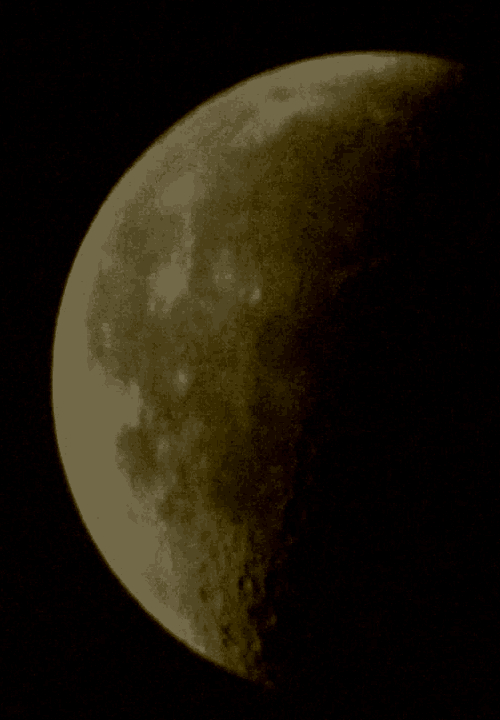
The Moon was a thick waning crescent, almost due south. I snapped it at 300mm focal length, ISO 400 and 1/250 second exposure


I changed my settings to 300mm focal length, ISO 100 and 1/1600 second exposure, added a filter and snapped the Sun


July 18th 0510 GMT Moon and Sun


I snapped the Moon at 300mm focal length, ISO 400 and 1/400 second exposure.


I added a solar filter to my camera and changed my settings to 300mm focal length, ISO 100 and 1/1000 second exposure. I used a longer exposure for the Sun, as it was very low.


July 16th 1130 GMT Sun
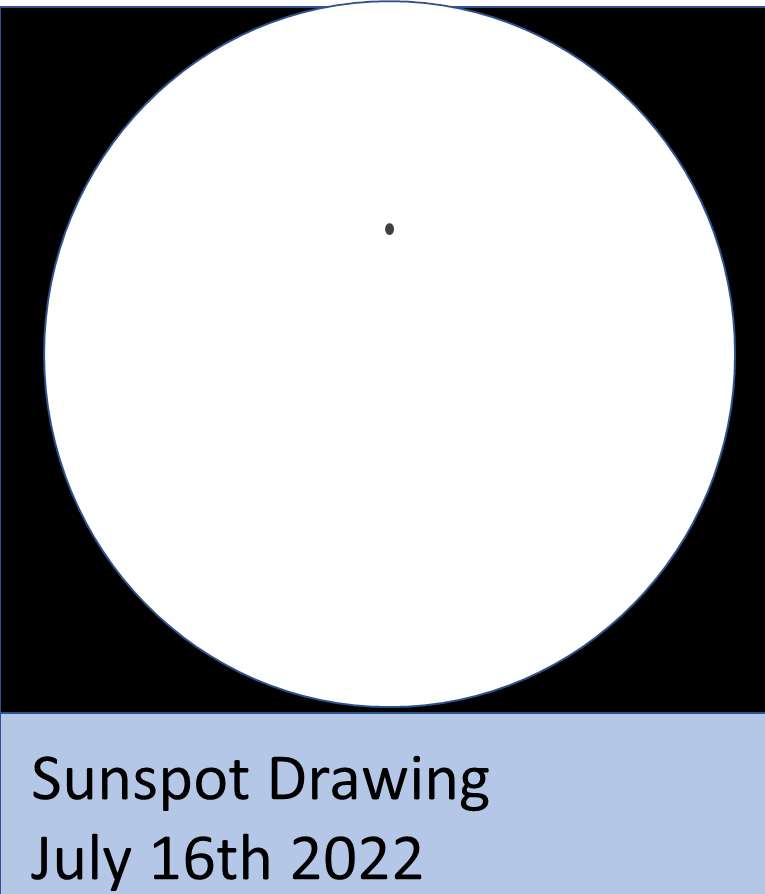
I bin scanned the Sun in hazy conditions and caught a single sunspot.


July 16th 0110 GMT Moon, Jupiter and Saturn


The Moon was low and conditions were hazy. As the Moon and Saturn were close together, I snapped them together and individually at 300mm focal length ISO 100 and 1/800 second exposure for the Moon and 1/50 second for Saturn.


I did not get any details on Saturn, so I combined the two above photos.


I snapped Jupiter at 300mm focal length ISO 100 and 1/200 second exposure but did not get any details. 

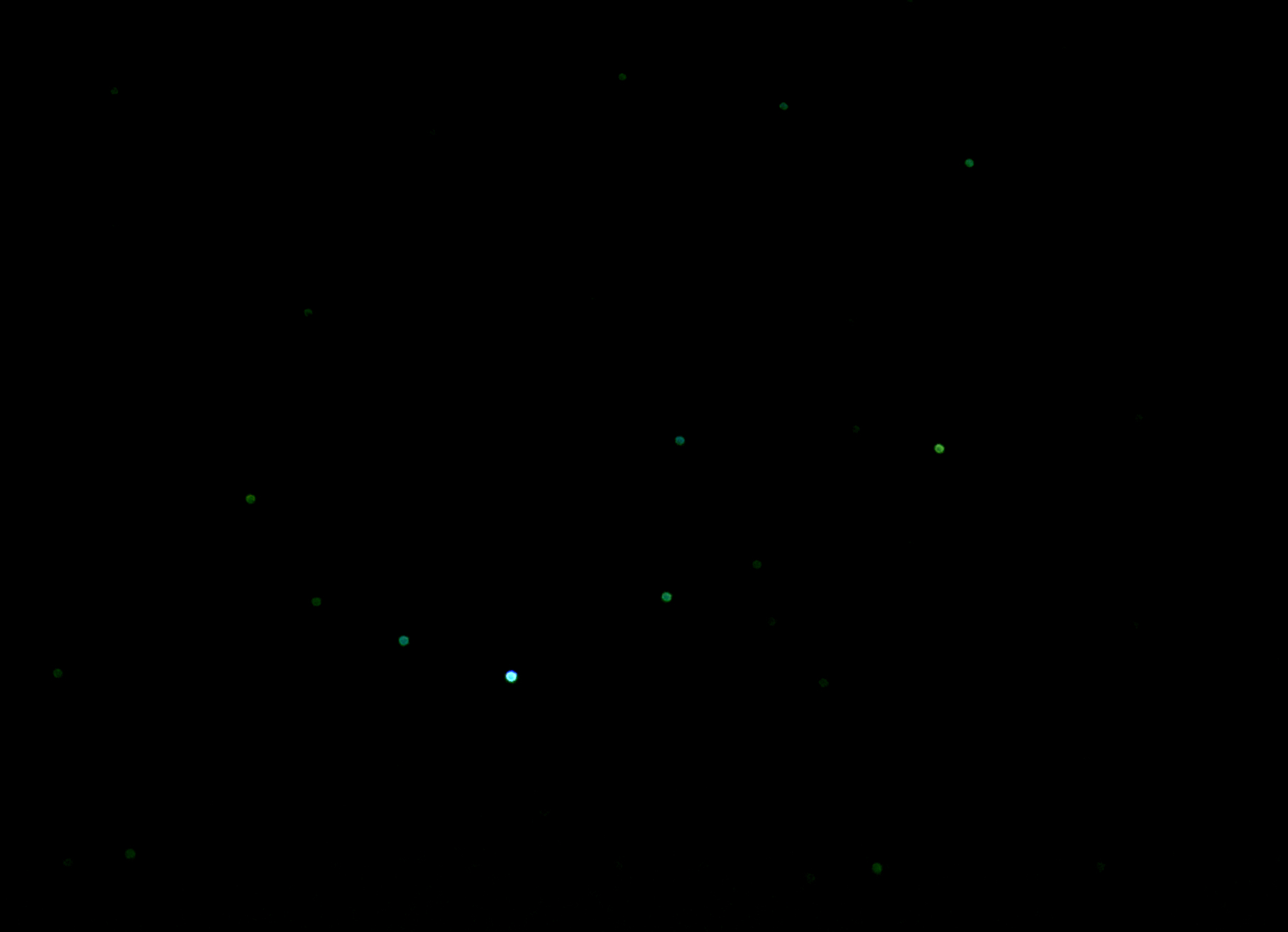
I went for Jupiter’s moons at 300mm focal length ISO 6400 and 2 seconds exposure.


July 15th 0510 GMT Sun

The Sun was low and partly obscured.


July 14th 0610 GMT Sun


I bin scanned the sun in clear conditions and caught a sunspot or three.


July 11th 0510 GMT Sun

I bin scanned the Sun and saw four of the five sunspots on the Learmonth images.


July 10th 1420 GMT Sun


The sky was spotted with patchy cloud, with clear areas in between. A binocular scan, with filters, showed four of the five sunspots on the Learmonth images.


July 10th 0030 GMT Planets and Deep Sky


I attempted to capture Jupiter’s moons with my DSLR at 300mm focal length, ISO 6400 and 2 seconds exposure.


I tried the planet at 300mm focal length, ISO 100 and 1/100 second exposure.


I then tried Saturn at 300mm focal length, ISO 100 and 1/15 second exposure.


I reverted back to 300mm focal length, ISO 6400 and 2 seconds exposure and started a deep sky shoot. I took about 20 frames for each target.

First up was my old faithful of Melotte 20.


I kept trying for the Perseus Double Cluster and failed.


Next up was the Andromeda Galaxy (M31).


Returning to Perseus, I caught the star cluster M34.

I then caught the Perseus Double Cluster.


I ended up with the Pinwheel Galaxy (M33). Or... so I thought but I was aiming at the Andromeda Galaxy instead. It wasn't a total loss, as one of the shots caught a meteor.


I shot a few dark frames. As I packed my gear away, dawn was breaking.


July 9th 2220 GMT Moon

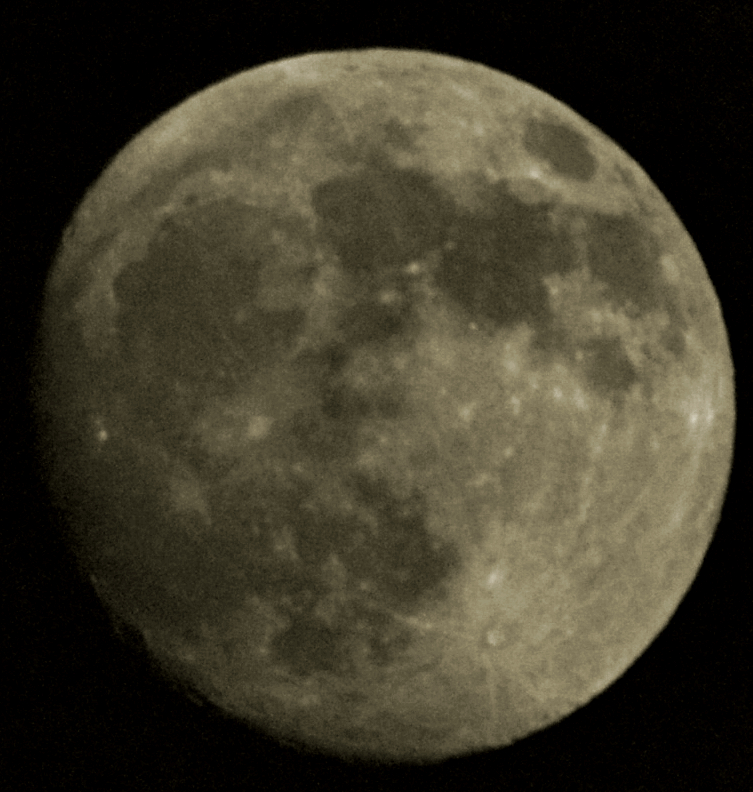
I snapped the Moon with my DSLR.


July 9th 1230 GMT Sun


It cleared enough to see the Sun but I decided to have a go with my Coronado PST. I had not got a decent set of images from it for a while and had just about given up. I wondered if cleaning the objective lens would work but hadn’t managed to unscrew it.


I set up with a tripod and 15mm focal length eyepiece, delivering a magnification of just under 27x. Immediately, I could see sunspots but etalon tuning (adjusting the wavelength of light coming through) only revealed a hint of plages surrounding the sunspots.


I took some afocal shots with my camera ‘phone (possibly a silly idea!) and with my DSLR. I tried various camera focal lengths and hoped for the best. This was the best. I caught some hydrogen alpha features but not as many as I'd hoped.


July 9th 1100 GMT Sun

Being a Saturday, I was thinking of taking my Mak and filter out for a solar shoot but it was a case of cloud-dodging for clear patches. I could see some sunspots though my camera viewfinder, so I thought that a DSLR only shot, at my usual settings would produce a result.


July 8th 0510 GMT Sun

I photographed the Sun with my DSLR and filter at 300mm focal length, ISO 100 and 1/2000 second exposure.


July 7th 1540 GMT Moon and Sun


I snapped the Moon with my DSLR at 300mm focal length, ISO 400 and 1/500 second exposure.


I added a filter to the set-up to snap the Sun at 300mm focal length, ISO 100 and 1/2000 second exposure.


July 5th 0505 GMT Sun

I snapped the Sun with my DSLR and filter at 300mm focal length, ISO 100 and 1/2000 second exposure.


July 4th 0505 GMT Sun


There was some cloud around when I did a bin scan of the Sun. I only saw one os the sunspots that I had photographed the day before.


July 3rd 2030 GMT Moon

I snapped the Moon with my Mak and DSLR.


July 3rd 0920 GMT Sun


So finally, after so long without being able to use my 127mm Maksutov for white light photography or viewing, I finally took it out with my new filter and DSLR.

 I took a series of shots at 1.54 metres focal length, ISO 100 and 1/1000 second exposure.


As there were two sunspots close together, I attempted a close-up at 4.62 metres focal length, ISO 100 and 1/100 second exposure.


July 3rd 2300 GMT Meteor Hunt/Constellations

This time I aimed my camera, with its usual settings at Aquila. It was a bit murky but there was a small chance of catching an Anthelion meteor, as well as any sporadic meteors that might have been in the area.

At 2315 GMT, I caught a meteor near Aquila.


At 2323 GMT, I caught another one in the same part of the sky.


As usual, I started stacking constellation shots. With Aquila, there was Scutum, Sagitta, Delphinus and Vulpecula.


Cloud had encroached onto the remaining photos and there were no more meteors.


July 2nd 2110 GMT Moon


I caught the Moon with my DSLR at 300mm focal length, ISO 100 and 1/250 seconds exposure.


July 1st 2250 GMT Meteor Hunt and Constellations

I repeated a failed shoot in late June where everything was out of focus. I used my normal settings. I aimed at Cassiopeia.

At 2255 GMT, I caught a faint meteor near Cassiopeia.


The first 30 of 40 frames caught Cepheus with Cassiopeia,


The next set of frames was similar but the Andromeda Galaxy showed much better.


... and the next one!


At 2326 GMT, I caught a short meteor trail.


The next set of frames were similar with Cepheus about to rotate off.


In fact, Cepheus had not rotated off in the next set of frames.


July 1st 2050 GMT Moon


The thin waxing crescent moon hung low in the north west after sunset. It was just about to disappear behind some trees and I had to walk a few yards from our front door to see it. I used my DSLR at 300mm focal length, ISO 400 and 1/200 second exposure.


Wednesday, June 1, 2022

June 2022

June 26th 0105 GMT Deep Sky and Planets


I swapped my wide field zoom lens with my telephoto zoom lens. I started off with Melotte 20 at 70mm focal length, ISO 6400 and 6 seconds exposure.


Saturn was around, although my initial aim missed it and caught some star fields.


When there, I tried to capture Titan at 300mm focal length, ISO 6400 and 2 seconds exposure. I captured Saturn and as satellite trail but no sign of Titan.


I then tried the planet, at various exposures, more in hope than expectancy!


Jupiter had risen and I repeated the moon shot and caught 3.


Finally, although dawn had already broken, I took a few more shots of Melotte 20 at 300mm focal length, ISO 6400 and 2 seconds exposure.


June 26th 0010 GMT Meteor Hunt


There was no reason to suspect that there would be any more meteors in the east than anywhere else but regulars to my blog and photo album will know that I obtain constellation images as by-products of meteor searches. So, I set up my camera and intervalometer in the direction of Cassiopeia and hoped.

My hopes were dashed. No meteors and the stars were out of focus.

June 25th 1040 GMT Sun


There was a lot of moving cloud but I managed to catch the Sun in a patch of clear sky. Feeling that some of my recent shots had been overexposed, I used my DSLR and filter at 300mm focal length, ISO 100 and 1/4000 second exposure.


June 25th 0015 GMT Deep Sky: Cygnus


Sometimes astronomy can throw up unexpectedly good surprises as well as the bad ones. After a cloudy and wet day. I was expecting to do little more than process photos from June 11th. Although most of the sky was cloudy, the area around Deneb in Cygnus was clear. I took two sets of frames, one at 70mm focal length, ISO 6400 and 8 seconds exposure and the other at 300mm focal length, ISO 6400 and 2 seconds exposure. For the second set of frames, I shot some dark frames.

Another unexpected bonus turned up when a meteor passed close to Deneb.


The first set of frames at 70mm focal length brought out the North America Nebula.


The closer set did not show the nebulousity.


June 23rd 0615 GMT Moon and Sun


The Moon was at a waning crescent phase and I photographed it with my DSLR at 300mm focal length, ISO 400 and 1/125 second exposure.

 Well that's what happens when you get a large processing queue. I did not realise that I was overexposing the Moon so much. As it happened, my solar shots were also over-exposed. 

I photographed the Sun with my DSLR and filter at 300mm focal length, ISO 100 and 1/2000 second exposure. I did not get any in focus.

June 22nd 0510 GMT Moon and Sun


I snapped the waning crescent moon with my DSLR at 300mm focal length, ISO 400 and 1/160 second exposure. Unfortunately, the photos were overexposed.

I followed up with the Sun, using my filter at 300mm focal length, ISO 100 and 1/2000 second exposure.


June 21st 0625 GMT Moon and Sun


I snapped the Moon with my DSLR at 300mm focal length, ISO 400 and 1/100 second exposure. The images were over-exposed and I could not see the Moon on any of them. 

I followed up with the Sun with a filter at 300mm focal length, ISO 100 and 1/2000 second exposure.


June 20th 0515 GMT Moon and Sun


After a wet weekend, I snapped the waning gibbous moon with my DSLR at 300mm focal length, ISO 400 and 1/200 second exposure.


 I then added a filter to snap the Sun at 300mm focal length, ISO 100 and 1/2000 second exposure.


June 19th Double Rainbow

I caught a rare double rainbow from home.  


June 18th 0105 GMT Moon


The Moon was low in the sky and it was rather murky. I did not feel like staying up much later, so I tried a few shots with my DSLR at various settings. 

Just to show that not everything goes right for even experienced astronomers, all shots were out of focus, resulting in a wasted night.


June 18th 2310 GMT Meteor Hunt


Conditions were hazy, with light cloud, and it never gets properly dark in the UK near the summer solstice. I could finally see the Plough after checking the sky for over an hour. I aimed my camera there, hoping for some constellation shots, even if I did not catch any meteors. As it turned out, I had set the camera at the wrong focal length and the focus was out: very out!


June 17th 0635 GMT Sun


I arrived at work and photographed the Sun with my DSLR and filter at 300mm focal length, ISO 100 and 1/2000 second exposure. I was able to see a sunspot in the camera viewfinder, so omens were good.


June 16th 0655 GMT Sun

I did another solar shoot with my DSLR and filter at 300mm focal length, ISO 100 and 1/2000 second exposure.


June 15th 1625 GMT Sun


The Learmonth images showed the emergence of many more sunspots. I tried for them with my DSLR and filter at 300mm focal length, ISO 100 and 1/2000 second exposure, my usual settings.


June 14th 0655 GMT Sun

I bin scanned the Sun in fair conditions.


June 13th 2055 GMT Moon

The full moon was low in the south east. I snapped it with my DSLR at 300mm focal length, ISO 100 and 1/1000 second exposure.


June 13th 0540 GMT Sun

I bin scanned the Sun in fair conditions.


June 12th 2000 GMT Moon

 And so it came to pass that an astronomically active weekend came to an end. Being a “school night” with an early start to work the next day, I photographed the Moon before sunset. I used my DSLR at 300mm focal length, ISO 400 and 1/.800 second exposure.


June 12th 1655 GMT Sun


I bin scanned the Sun in cloudy conditions.


June 11th 2300 GMT Meteor Hunt and Constellations

When it was dark enough, I aimed my camera at Ursa Major and Ursa Minor and set my camera and intervalometer to take photos every 12 seconds at my usual settings of 18mm focal length, ISO 6400 and 6 seconds exposure.

The first 40 frames showed both constellations.


As cloud moved into the later frames, I only stacked 7 from the next 10.


At 2352 GMT. I detected a faint meteor.


I moved the camera to the west. A set of 40 frames resulted in this image of Corona Borealis.


June 11th 2210 GMT Moon


Hay fever had hit hard, so I did not take my telescope out for a long session. Instead, I did a quick session with my DSLR at 300mm focal length, ISO 100 and 1/800 second exposure.


June 11th 1230 GMT Sun

Despite a clear sky and the presence of 3 small sunspots on the Learmonth images, I was unable to detect any sunspots in my binoculars and filters.


June 11th 0120 GMT Binocular Scan

I set the camera running for a few more minutes while I had a binocular scan. I was too tired to take my Mak out again. Saturn was low in the south east. I saw its irregular shape due to the rings but did not see Titan. I saw Albireo in Cygnus, also like visiting an old friend. It took me several tries to bag the Wild Duck Cluster (M11) in Scutum. With some haze and moonlight, the Andromeda Galaxy (M31) was barely visible and some of the fainter stars of the cluster Melotte 20 were “missing”. I also saw the Coathanger. That was all but it was a pleasant short session to end the night.


June 11th 0010 GMT Meteor Hunt and Constellations


Time for the usual stuff, despite the Moon, which happened to be quite low in the sky. I aimed my camera at the Summer Triangle and took multiple shots using my DSLR and intervalometer. My settings were my usual 18mm focal length, ISO 6400 and 6 seconds exposure.

As a by-product of the meteor search (again, as usual), I stacked 30 frames from each set of 40, although the south west (lower right) parts of the images were most affected by moonlight, so I cropped them out.

The first set of frames produced an image of the Summer Triangle.


The second set of frames caught just Cygnus and Lyra.


For the third set of frames, Vega and some other stars in Lyra had rotated off the view but the minor constellations of Vulpecula and Sagitta had joined the party. The fuzzy patch is the Coathanger asterism.


The fourth set of images was similar but also caught parts of Aquila, including Altair.


At 0048 GMT, I caught a short trail meteor that was sporadic (not associated with a shower).


The fifth set of shots saw Cygnus with Vulpecula and Sagitta again but Delphinus and Aquila also came into view.


The next set was similar.


In the next set, parts of Cygnus had rotated off but the other constellations had risen higher.


The next set of images produced a similar result.


As did the next.


Although these images are similar, you can see Aquila and the minor constellations rising higher in the sky.


The final image was similar.


June 10th 2200 GMT Moon


I used my Mak with my DSLR. I started with 1.54 metres focal length, ISO 100 and 1/100 second exposure to get some full disc shots. This was the best.


I then added a 3x Barlow lens to deliver 4.62 metres focal length, ISO 100 and 1/20 second exposure to take a series of close-ups.


June 10th 2044 GMT Moon


It was clear but I decided to do a DSLR shot of the Moon at 300mm focal length, ISO 100 and 1/640 second exposure. I did not want to risk the possibility of missing out completely if it clouded over later.


June 8th 2040 GMT Moon

Fortunately, it stayed mostly clear and I was able to snap the Moon with my DSLR at 300mm focal length, ISO 100 and 1/500 second exposure.


June 8th 1705 GMT

 There was a chance of a Moon shoot during evening twilight but with 7 days of hurt since my last Moon shot, I decided to do a daylight shoot in case it was cloudy later. I used my DSLR at 300mm focal length, ISO 400 and 1/500 second exposure. 


June 3rd 1025 GMT Sun

Conditions were poor, with a lot of moving cloud. Sunspots were visible on the Learmonth images but I did not see any through my binoculars and filter.


June 1st 2210 GMT Melotte 111 and Meteor Hunt


I started off with a few shots of Melotte 111 at 100mm focal length, ISO 6400 and 6 seconds exposure. Ironically, I caught two meteors on the second frame.


I stacked 9 of 12 frames to get this result.


I then switched to 18mm focal length and aimed at Bootes, hoping to catch some meteors, or at least with the consolation of some constellations as a by-product.

The first set of frames showed Coma Berenices, Bootes and Corona Borealis.


The second set of frames was similar.


The third set of frames produced a similar result when stacked but the stack did not show a slow moving object over several frames.


I made the frames into a video.


I took some close-ups, which suggested that the moving object was about 8th magnitude.


The 4th set of images lost some of Coma Berenices but caught most of Hercules.


The fifth and final set of images was similar.


June 1st 2110 GMT Moon

The Moon was too low for me to catch with a telescope, so I did a DSLR shot at 300mm focal length, ISO 100 and 1/200 second exposure.


June 1st 1700 GMT Sun


June kicked off with a clear early evening sky and four sunspots showing, although none of them was particularly large. It is debatable whether they would have registered on my camera.