Wednesday, April 24, 2019

Phil's Profile

About Philip Pugh

Philip Pugh describes himself as a boring person who sometimes does interesting things. From 2007 to 2011, he published four titles under Patrick Moore's "Practical Astronomy" series.

Despite the success of these books, he always wanted to write a beginner book and published "Being an Astronomer" in 2018, which is now on the third edition. He is now writing shorter pieces under the "Phil's Scribblings" series. The first one is "Astrophotography with a DSLR". Many of Phil's Scribblings were available on the now-defunct "Astronomy Wise" website.

Phil's writing history goes back to 1980 when he published a humorous piece in "Angling" magazine. Recently, he has had articles published in Best Binocular Review:

https://www.bestbinocularsreviews.com/

He is an active astronomer, with a special interest in the Sun and has a popular blog, known worldwide:
https://sungazer127mak.blogspot.com/

Despite having a small budget for astronomy and photography equipment, he has produced some interesting photographs:

https://www.flickr.com/photos/philippughastronomer/
Phil is married to Helga and they have one adult daughter, Marcela.

Although mostly known most recently for astronomy, Phil was once a competitive chess player, winning county junior championships and was a bridge master. His other claim to fame was being born exactly the same day as Bruce Willis.

Thursday, April 4, 2019

April 2019

April 25th 0000 GMT


It was clear, having been cloudy for most of the day. My plan was to catch Lyrids, so I set the camera at 16mm focal length, ISO 6400 and 8 seconds exposure. Unfortunately, conditions deteriorated, so I was moving the camera around to catch some clear patches of sky. Needless to say, I did not see any meteors.

I had four decent frames of Ursa Minor.


I had 18 frames of Lyra but Deep Sky Stacker selected 11 and I also caught Cygnus.


I only had one frame of Bootes with Corona Borealis but it was enough.


April 22nd 0000 GMT


The Moon was low in the south east. I used my DSLR at 300mm focal length, ISO 100 and 1/500 second exposure.


April 21st 2145 GMT


There was some clear sky but, on closer inspection, it turned out to be hazy. With it being one day before the Lyrids maximum, I went out armed with my DSLR. I set the focal length to 16mm, ISAO to 6400 and exposure to 15 seconds. It was obvious that I was catching a lot of sky glow. I aimed at the head of Draco and set the exposure time to 4 seconds. I did not see any Lyrid meteors but saw a faint sporadic meteor flash through Cygnus.

I thought I had caught a faint, short meteor trail but it turned out to be a satellite trail.


I used Deep Sky Stacker to create this widefield image of Draco's head from 150 frames using a 2-stage stack.


April 21st 2315 GMT


I snapped the Moon with my DSLR at 300mm focal length, ISO 100 and 1/800 second exposure.


Although the scattered moonlight did not instil much confidence, I started at the region around Lyra for a few minutes. Afterwards, I was still waiting for my first meteor of the year.

April 20th 1230 GMT

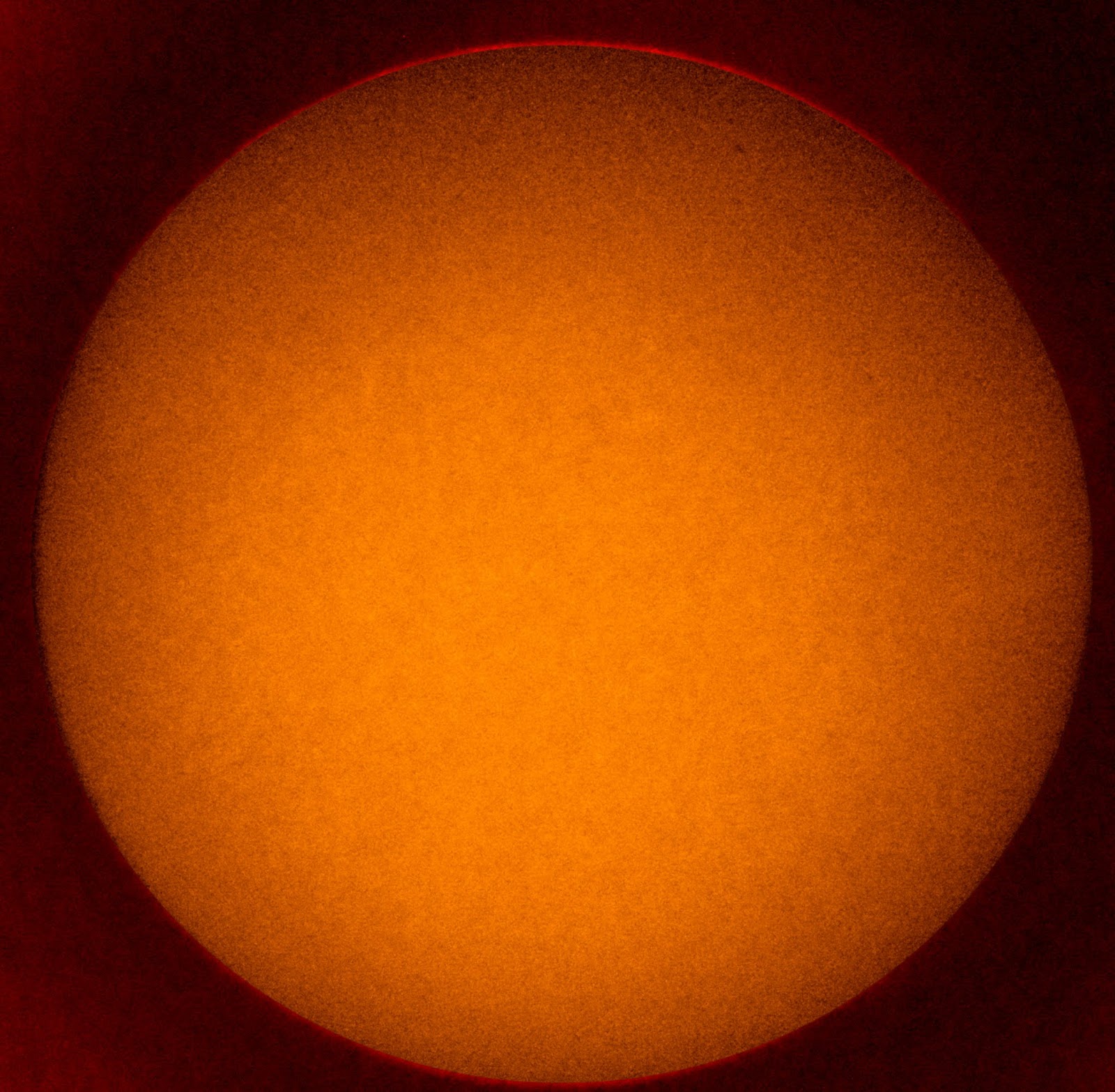
I photographed the Sun in hydrogen alpha light with my PST and decided to try autofocus. No such luck! I did not have any useable frames.

April 18th 2215 GMT


Conditions  were hazy again. As I was tired, I just snapped the Moon with my DSLR at 300mm focal length, ISO 100 and 1/500 second exposure. I stacked 5 of 9 frames.


April 18th 1500 GMT


It was a bit hazy, so I went for the Sun with DSLR again, in hope.


April 17th 2200 GMT


The Moon was nearing full phase and thin cloud was scattering its light. The faintest star visible was Castor. The only sensible target was the Moon itself but I wasn’t complaining. After some under-exposed shots, I used my Mak and DSLR at 1.54m focal length, ISO 100 and 1/500 second exposure. I took 100 frames. It was under-exposed but a bit of processing sorted it out.


I used a 3x Barlow lens to boost the focal length to 4.6m and increased the exposure time to 1/50 second. I took several runs, including Tycho, Plato and Copernicus.

First there was 51 frames of Tycho.


Then there were 50 frames of the terminator below Tycho:

This was another set.


I combined the first 3 sets of close-ups to create a stitched composite.

Then there was Plato.


Mare Crisium.

Copernicus.


The final sequence was a bit disappointing.


April 17th 1100 GMT

After a cloudy day the day before, the weather reverted to hazy sunlight. The sunspot took some tracking down and it had rotated quite noticeably in two days.


April 15th 1130 GMT

Conditions for solar viewing and photography were poor again. Owing to the lack of success photographing the Sun the day before, I bin scanned the Sun instead. The large sunspot had rotated quite considerably.


April 14th 2215 GMT


Conditions were very poor but I had a crack at the Moon. I needed ISO 800 and 1/200 second exposure to register an image. Naturally, I used 300mm focal length. The result was very poor and not worth showing.

April 14th 0920 GMT


Conditions were poor, with lots of thin cloud but I proceeded anyway with my solar shoot. I caught the faint signature of the sunspot.


April 13th 1935 GMT


I did some shots of the Moon with my DSLR at 300mm focal length, ISO 400 and 1/1000 second exposure. I stacked six of 11 frames in Microsoft ICE and finished off in GIMP.


April 13th 0920 GMT


I did another shoot of the Sun with my DSLR at 300mm focal length, ISO 100 and 1/4000 second exposure.


April 12th 0900 GMT


My hips were aching, so instead of using my Mak with my DSLR, I used the DSLR alone with 300mm focal length, ISO 100 and 1/4000 second exposure. I could see the large sunspot clearly in the viewfinder but did I over-expose the shot?


I then proceeded to snap the Sun with my PST, as the day before. However, it did not show any more detail than the "white light" shot.


April 11th 1015 GMT


The sky was clear at times. I took a few frames of the Sun with my Mak and DSLR. The large sunspot was easy to see. I used ISO 100, 1/4000 second exposure and 1540mm focal length. Even with filters, the Sun looked clear.


Following some advice from  the folks at East Midlands Stargazers, I re-checked the focus and etalon tuning on my PST. With the sunspot and faculae surrounding it, I managed to see both clearly after a few adjustments. This was much easier than without any noticeable features.


April 11th 2340 GMT


The Moon was low. I went out again but with my camera alone. I used ISO 6400, 16mm focal length and 15 seconds exposures. I took sets of frames of Virgo, Arcturus and Lyra. I have loads of shots of Lyra but it is one of my favourites.

I just caught the Virgo bowl and not the whole constellation. I needed a wider view or multiple images to stitch.


Bootes and Corona Borealis came out well.


Lyra turned out well.


April 10th 2115 GMT


The Moon was a waxing crescent and quite bright. It was some time since I had had a decent lunar session. I took some full disc frames with my Mak and DSLR at 1540mm focal length, ISO 100 and 1/250 second exposure.


I then took a series of sets of frames using the above setup with a 3X Barlow lens and 1/25 second exposure. However, the focus was slightly out.


April 10th 1045 GMT


Despite the weather forecast, there were some clear patches between the moving cloud. I managed to see the large sunspot at last! I was using my binoculars and filters.


April 9th 2015 GMT


Conditions were poor but I had a go at the crescent moon anyway. I used my DSLR at 300mm focal length, ISO 6400 and 1/4000 second exposure, hand-held.


April 8th 1545 GMT

I saw some sunspots on the Big Bear images but a bin scan came up blank.

April 6th 1230 GMT

I tried to check the Sun in hydrogen alpha light but the apparently light cloud obscured any features that may have been present.

April 1st 1150 GMT


April kicked off with a clear sky. Although sunspots were visible on the professional observatory images, the Sun seemed quiet in hydrogen alpha light. I took a few frames anyway.


Thursday, March 7, 2019

March 2019

March 29th 2215 GMT


I didn’t get outside until late and had an early start the next day. I decided not to take a camera out and when I got outside I was glad I didn’t bother. It was so hazy, especially near the horizon, that I could not even see the Hyades and Pleaides (M45) in binoculars! I could see the brighter stars of Melotte 20 and also the Beehive (M44), as it was higher in the sky. I could also see Melotte 111, which had reached a respectable altitude. No other deep sky objects, apart from Alcor/Mizar were visible, so that was that! 

March 28th 2100 GMT


I went out with my DSLR, with my usual settings of 300mm focal length. ISO 6400 and 2 seconds exposure.

First up was Melotte 20. Like the Beehive (M44), I find it difficult to resist. I didn't catch it, though!

I had trouble finding M34, so I went for M35. Got this one!


I went back to M34 and missed it.

March 27th 1340 GMT


There was a patch of clear sky but the Sun was quiet. As usual, I proceeded with a photo shoot anyway!


March 26th 2250 GMT


I would have gone out earlier, except my camera battery was flat! Despite the weather forecast, it was surprisingly clear. Having possibly caught Ursa Major the night before, I was hoping for some closer shots with my DSLR at 300mm focal length, ISO6400 and 2 seconds exposure.

I started off by having another pop at Regulus. I was having real trouble getting M35 and thought that it might be one of those nights.


I got a few quality frames of the Beehive (M44).


I had a few goes at M67 but did not think I had caught it, despite taking several shots around the target area.

March 25th 2100 GMT


I was busy indoors, so set a camera to take star trail shots of the Plough.


They were over-exposed. I took some stills and spent ages trying to stitch the whole constellation but it didn't work. I just caught the western part.


March 25th 1440 GMT


The Sun was dimmed by a layer of thin cloud but I went ahead and did a hydrogen alpha shoot anyway. I could not see any detail.

March 24th 2025 GMT


The clear sky continued past dusk and I wanted to revisit some deep sky objects with my DSLR at 300mm focal length, ISO 6400 and 2 seconds exposure. Unfortunately, the focus was a bit off.

First up was the Pleaides (M45), mostly as a sighter.


I saw a few stars in Perseus before I caught my intended target, M34.


Same for M35.


I then moved to Regulus.


More in hope than judgement I went for M65 and M66 in Leo. I didn't catch either.


I finished with the Tau Canis Majoris cluster. I missed the target.

March 24th 1050 GMT


There was a rare clear sky, I shot the Sun in hydrogen alpha light using my PST. The solar disc seemed quiet.


I saw some sunspots on the Big Bear and Learmonth images, so I had a go in white light with my DSLR and Mak. I used 1.54m focal length, ISO 100 and 1/4000 second exposure. Early indications showed that I had caught some sunspots about to rotate off. They appear as a single sunspot near the "4 o' clock" position.


March 23rd 0945 GMT

There were some sunspots on the Learmonth Solar Observatory images. Despite moving cloud, I tries to see them with my binoculars and filters but without success.

March 17th 2335 GMT


The sky was clear but it was cold and I felt too tired to drag a telescope outside. I took some full disc solar shots with my DSLR at 300mm focal length, ISO 6400 and 1/4000 second focal length.


March 17th 1015 GMT


There was lots of moving cloud around but I managed a few shots of the Sun with my PST and DSLR.


March 16th 2355 GMT


There was a lot of moving cloud around but I managed to snap the Moon with my DSLR anyway. I used 300mm focal length, ISO 6400 and 1/4000 second exposure.


March 14th 1235 GMT


The Sun looked quiet in my Coronado PST, although the professional observatories showed some features. I snapped in hope! I caught some minor activity on the edge of the solar disc, so processed the Red and Green channels separately.


March 12th 2235


There was a rare patch of clear sky, so I “attacked” the Moon with my DSLR at 300mm focal length, ISO 6400 and 1/4000 second exposure. Unfortunately, all attempts were ruined by poor focus.

I also tried some longer-exposure shots on the Moon with nearby Aldebaran. Now these DID work!


March 11th 1010 GMT


The Sun was quiet again in hydrogen alpha light, as I took some more images.


March 10th 2330 GMT


I went out again and shot a few frames of Leo at ISO 6400, 30 seconds exposure and 16mm focal length. I realised that the ISO was too high, so reshot with 15 seconds exposure. I stacked 13 frames and also caught Leo Minor above Leo.


March 10th 2035 GMT


I went out to catch Perseus on film but found conditions difficult with moving cloud. I kept moving the camera around to catch patches of clear sky.

The first shot was the Plough but I had to remove a lot of stray light.


I got my Perseus shot for a writing project but attempts to stack multiple images resulted in some stars appearing double. I processed a single frame that also included the Pleaides (M45).


I caught the Hyades and Pleaides in the same frame.


I took two frames of Cassiopeia but they didn't stack. I processed a single shot and caught the Perseus Double Cluster and Melotte 20 in the same frame.


March 10th 1835 GMT


There was still a lot of moving cloud around so I just shot the Moon with my DSLR at 300mm focal length, ISO 400 and 1/200 second exposure.


March 10th 1215 GMT


I had been watching moving cloud, on and off, for a while when I finally caught a clear spell and photographed the Sun. It was quiet in hydrogen alpha light.


March 7th 0940 GMT


Finally, March kicked off with a clear patch of sky between the clouds. The Sun was quiet but I had a nice, sharp image with my Coronado PST.