Friday, July 5, 2024

July 2024

July 31st 0645 GMT Sun 


I photographed the Sun with my Mak and DSLR at 1.54m focal length, ISO 100 and 1/500 second exposure.


July 31st 0235 GMT Moon and Jupiter 


I snapped them again using my DSLR at various exposures at 55mm focal length and ISO 6400.


I photographed the Moon and then Jupiter at 300mm focal length, ISO 100 and 1/160  second exposure. The Moon shot worked well after stacking but the Jupiter shots did not.


July 31st 0230 GMT Moon and Jupiter 


I snapped the Moon with Jupiter with my phone camera. I also caught Capella and Aldebaran.


July 30th 2200 GMT Meteor Hunt 


Conditions were quite poor again but I left my camera outside to do its work. It did what I set it to do but any meteors that were there were clouded out.


July 30th 0850 GMT Sun 


It was sunny and hot. I snapped the Sun with my Mak and DSLR at 1.54m focal length, ISO 100 and 1/500 second exposure. The stack did not work.


July 30th 0110 GMT Moon, Aldebaran and Jupiter 


I was packing my equipment away after a meteor hunt when I realised that Jupiter had risen near the Moon and Aldebaran, the brightest star in Taurus was nearby. 


I photographed them with my phone camera and took a shot of the Moon with my DSLR at 300mm focal length, ISO 100 and 1/200 second exposure but the DSLR shot did not work.


July 29th 2240 GMT Meteor Hunt 


I did not catch any Perseid shower meteors the evening before but had another go.

At 2320 GMT, I finally struck gold with what appeared to be a Perseid shower meteor.


At 2341 GMT, I caught a faint sporadic (non-shower) meteor below Ursa Minor.


At 0059 GMT, I caught my second Perseid shower meteor.


At 0114 GMT, I caught a faint shower meteor.


July 29th 1620 GMT Sun

I photographed the Sun with my PST and DSLR. Although I captured some features in both greed and red light, the white light photo from earlier in the day was more convincing.


July 29th 0700 GMT Sun 


I photographed the Sun at my usual settings of 1.54m focal length, ISO 100 and 1/500 second exposure.


July 29th 2320 GMT Moon 


The Moon was low in the east. I snapped it with my DSLR at 300mm focal length, ISO 100 and 1/320 second exposure.

It was a wasted effort as none of the photos was in focus.


July 28th 2240 GMT Meteor Hunt 

I did not catch any Perseid shower meteors the evening before but had another go. Unfortunately, this time I did not catch any meteors at all.


July 28th 2237 GMT Meteor 


I saw a bright sporadic meteor of about -2 magnitude flash south east from Aquila to the horizon.


July 28th 0840 GMT Sun 


After a clear night, I woke up to bright sunshine and photographed the Sun with my Mak and DSLR at my usual settings. The stack did not quite work but I caught the main features.


I processed a single frame to achieve a similar result but with a hint of Newton's Rings.


July 28th 0020 GMT Moon, Saturn and Melotte 20


The last quarter Moon had risen high enough to restrict photography of most objects, apart from itself. I started by trying to snap Saturn with Titan at 300mm focal length, ISO 6400 and 2 seconds exposure.


I used the same settings for the star cluster Melotte 20.


I changed the ISO setting to 100 and exposure to 1/500 second to photograph the Moon.


July 27th 2200 GMT Meteor Hunt 


It was still dusk but I was able to see most major constellations. I set my camera at 18mm focal length, ISO 6400 and 6 seconds exposure. I aimed  at Cassiopeia and hoped to catch a meteor or few from the Perseid shower.

I caught a meteor at 2230 GMT. It was bright but was a sporadic and not a member of the Perseid shower.


I processed ten background frames, stacking them and processing in GraXpert and GIMP. The result showed Lacerta, Cepheus and Cassiopeia.


I caught another meteor at 2343 GMT.


July 27th 0930 GMT Sun 


I snapped the Sun at my usual settings. The stack did not work, so I processed a single shot.


I then tried some afocal shots at full disc, just to see what would happen. It was overexposed and showed a lot of dust in the star diagonal.


July 27th 0020 GMT Moon and Saturn


I had waited a long time for the sky to clear, hoping to see some early Perseid meteors, or maybe even one. The Moon was up with a waning gibbous phase and I photographed it with my Mak and DSLR at 1.54m focal length, ISO 100 and 1/500 second exposure. Unfortunately, the stack cropped part of the lunar disc.


I then tried Saturn, gradually increasing the exposure time to 1/20 second. It was not surprising that I did not capture the rings, as they were nearly edge-on but, despite the stack, the result was less than convincing.


July 26th 0750 GMT Sun 


I photographed the Sun using my Mak and DSLR at my usual settings. There were lots of small sunspots.


July 25th Constellation Reprocess

I applied GraXpert to an image of Lyra from May 4th and boosted contrast in GIMP. 


July 24th 2320 GMT Moon 


The Moon was low in the south east and a very red colour, due to atmospheric distortion. It was also very hazy. I took some shots with my DSLR at 300mm focal length, ISO 100 and 1/250 second exposure.


July 23rd 1630 GMT Sundog

There was a lot of thin cloud around, preventing solar photography but I saw a parahelion (better known as a sundog) west of the sun. They sometimes occur in pairs but not this time.


July 23rd Constellation Reprocess

I reprocessed a widefield image of the Summer Triangle from June 1st using GraXpert and GIMP.


July 22nd 1620 GMT Sun 


Cloud moved in but I was still able to see sunspots. I used my Mak and DSLR at my usual settings.


July 21st 2210 GMT Moon 


The Moon was full, with a small terminator at the top, suggesting that was above the ecliptic. I snapped it with my Mak and DSLR at 1.54m focal length, ISO 100 and 1/500 second exposure.


July 21st 1700 GMT Sun 


It was not until early evening on the Sunday that I got my first live action of the weekend. The sky cleared to reveal the Sun. There were many small sunspots, probably too small to see in my binoculars and filters.

I took a few images using my Mak and DSLR at 1.54m focal length, ISO 100 and 1/500 second exposure.


July 21st Meteor Reprocesses

I used GraXpert to tidy up a meteor shot from June 9th but, frankly, the difference was not great.


I reprocessed another one from June 2nd, using GraXpert and GIMP and it was more convincing.


July 20th Solar Reprocess


I reprocessed a solar hydrogen alpha shot from April 4th 2021. I did not get much in either red nor green light.


The reprocess from January 23rd 2021 showed some shading in both red and green light but with a lot more detail in the green.


I revisited a much earlier shot from May 6th 2013 and the red and green data showed almost identical features. I just processed the red data.


The final reprocess of the day was from the green data on September 26th 2015, showing sunspots and filaments.


July 18th Star Trail Reprocess

I cleaned up the close-up star trail image of 14th.


I reprocessed a Summer Triangle shot from June 14th


July 18th 1030 GMT Sun


It took a while for the cloud to clear and the Sun to rise above the mist but when it did I was ready.

The Sun was much quieter than in recent weeks but I had a go with my PST and DSLR used afocally. I took a few shots with a 32mm Plossl eyepiece and camera at 55mm focal length at auto settings.
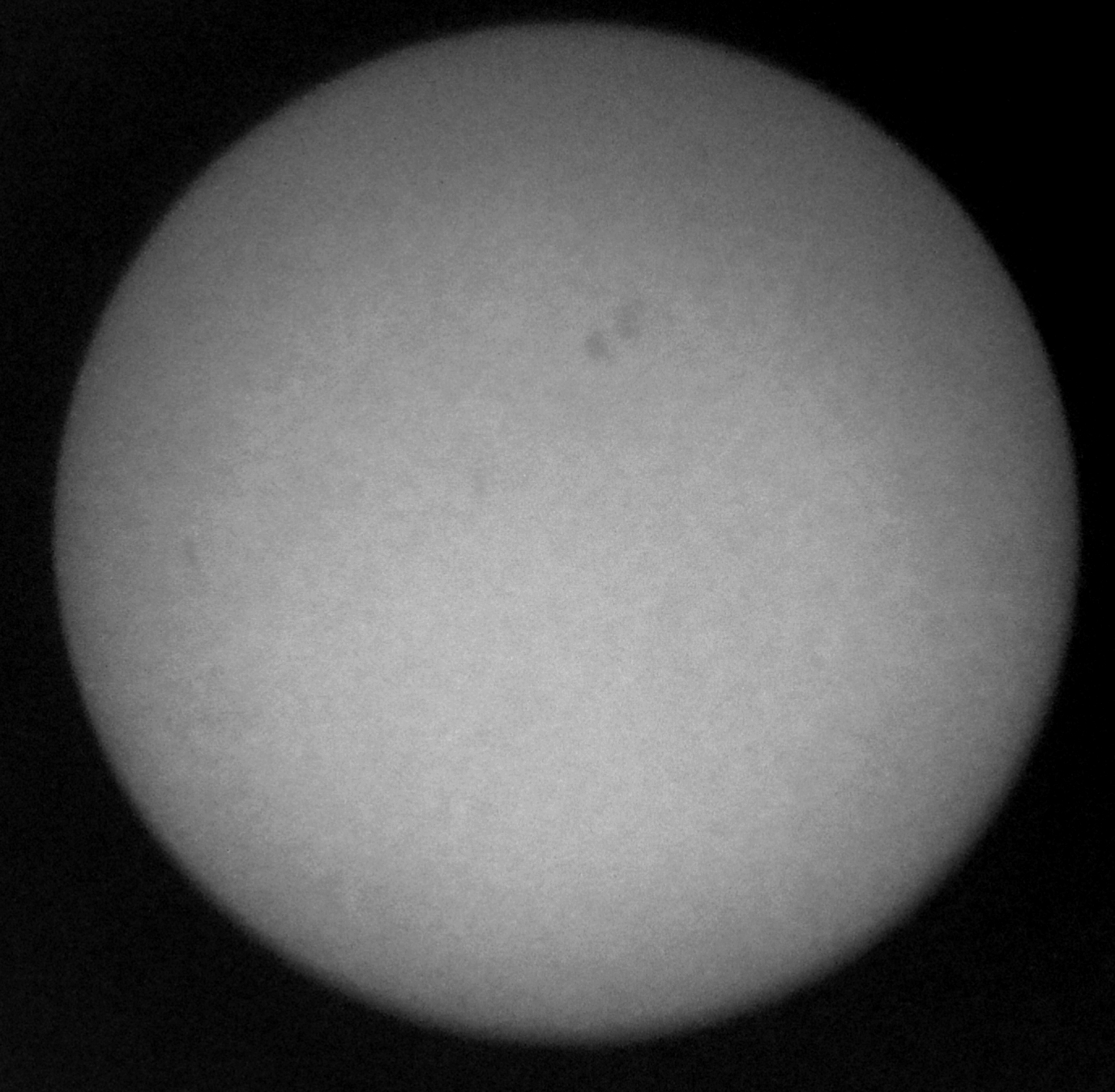


July 17th 1005 GMT Sun 


I waited for some clear sky then snapped the Sun with my Mak and DSLR at 1.54m focal length, ISO 100 and 1/800 second exposure.


July 17th Star Trails Reprocessed

I used Graxpert to remove the gradients from a recent star trails image. I also tried to denoise it but managed to crash my laptop.


July 16th Graxpert

A new version of Graxpert was released that uses Artificial Intelligence (AI). I reprocessed an image of Cepheus and Lacerta from June 1st. This ran much quicker and got rid of the gradient.


July 14th 2130 GMT Moon 


I thought that England might have won their first major tournament since 1966 but it wasn't to be. Losing in the final was better than in the group stage, though.

 Afterwards, dusk was about midway to as dark as it gets this time of year. The first quarter Moon hung low in the west and I photographed it with my DSLR at 300mm focal length, ISO 100 and 1/640 second exposure.


July 14th 2310 GMT Ursa Minor and Star Trails

I took a widefield shot of Ursa Minor. The bright star near the centre is Polaris.


Next to the main purpose of the session. I used my DSLR at 55mm, ISO 800 and about 10 minutes exposure. The focus was slightly out and there was what looked like a passing cloud or haze that I could not quite remove by processing.     


July 13th 0715 GMT Sun

For a change, the weather forecast was wrong but in my favour. It clouded out later but I took a few shots of the Sun with my Mak, filter and DSLR. A stack of 5 produced this result.


I used my PST at my usual settings. As usual, the green data looked similar to a white light image but the red data did not show much.


July 12th 1815 GMT Rainbow 


After a cloudy and often wet day, there was not enough sunlight to see or photograph the Sun but there was enough to create a double rainbow. The first image was taken with my phone camera.


The images from my DSLR at 18mm focal length and auto settings showed a lot more.


July 11th 2100 GMT Moon 


I snapped the Moon with my DSLR at 300mm focal length, ISO 100 and 1/500 second exposure. I stacked five images.


July 11th 0750 GMT Sun 


I caught a break in the cloud to photograph the Sun with my Mak and DSLR at 1.54m focal length, ISO 100 and 1/500 second exposure. The stack did not work but I managed to catch sunspots and faculae.


July 10th 2110 GMT Moon 


After England snatched a victory from a game destined for extra time against Holland, the Moon was low in the west. I snapped it with my DSLR at 300mm focal length, ISO 100 and 1/400 second exposure.


July 10th Solar Hydrogen Reprocess

An apparently interesting shot from April 5th 2021 showed a noisy green image and featureless red image.


July 9th Solar Hydrogen Reprocess

Rather like the reprocesses from the day before, the Son on May 17th 2021 showed some detail in green light and almost nothing in red.


 Now this is weird! A filament from a close-up  on April 17th 2021 shows better in green light.


Things looked rather different in the full disc images from the same day.


Nether the green nor red images from April 11th 2021 showed much.


July 8th Solar Hydrogen Reprocess
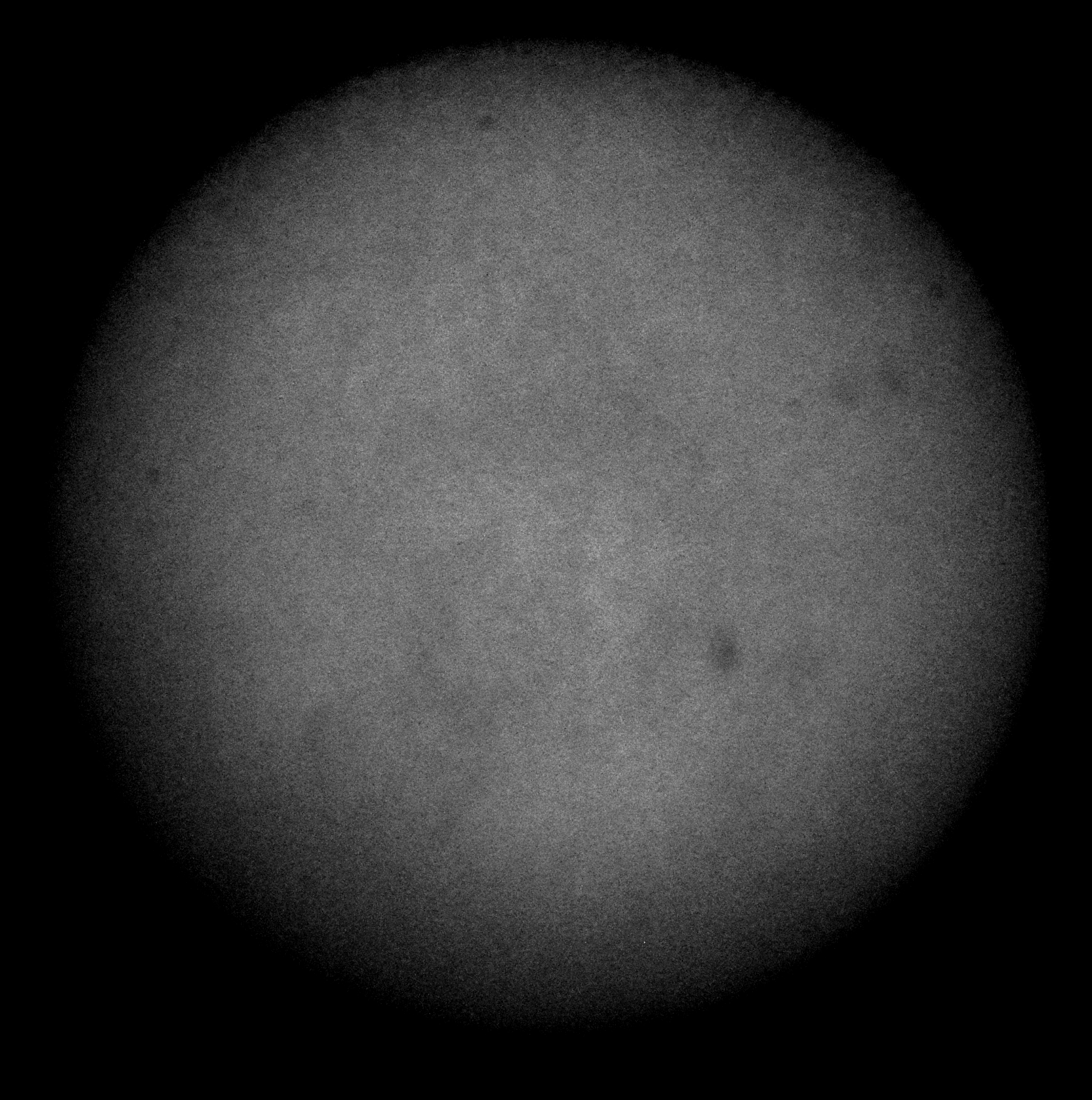
It was a very wet day. so I reprocessed a solar hydrogen alpha shoot from July 9th 2022, splitting it into green and red.


I also did a similar reprocess on a solar hydrogen alpha images from April 3rd 2020.


The last reprocess was from May 27th 2021/


July 7th 1650 GMT Sun 


I did a quick photo shoot of the Sun with my DSLR and filter at 300mm focal length, ISO 100 and 1/1000 second exposure.


July 6th 1535 GMT Sun 


It had been a very wet night and early morning. It cleared somewhat in the afternoon and I had time to do a solar hydrogen alpha shoot with my PST and DSLR afocally with auto settings.

The green data showed a lot of detail, as well as the sunspots but the red data was almost blank.


July 4th 0610 GMT Sun


It was American Independence Day and a general election in the UK but my mind was on other things. I woke up to an unexpected clear sky, so swung into action. I photographed the Sun with my Mak and DSLR at 1.54m focal length, ISO 100 and 1/500 second exposure.


July 1st 0500 GMT Moon


Was the year really half over? It had been a difficult half year in more ways than one but July started off against the weather forecast. I was expecting 100% cloud cover and rain and the Sun was obscured by cloud but the waning crescent moon was not. I photographed it with my DSLR at 300mm focal length, ISO 100 and 1/100 second exposure.


Sunday, June 2, 2024

June 2024

June 29th 1720 GMT Sun

I had another session with the Sun, this time with my Coronado PST. I did one afocal shot with automatic settings and another with manual settings at ISO 100 and 1/10 second exposure. I processed the green and red data separately. I did not get much in any of the shots.                  


June 29th 0920 GMT Sun 

 I was not up early, as I was up late the night before, hunting meteors. The Sun was quite high in the sky, while the Moon was behind a bank of cloud.

I used my Mak and DSLR at 1.54m focal length, ISO 100 and 1/500 second exposure, as normal.


June 29th 2315 GMT Binocular Sweep


I went out to check my camera that was trying to capture meteors and reset the counter. I took my binoculars out, hoping to catch a glimpse of Comet Olbers. A quick look round showed that it was still very much twilight and there was little chance of catching a 7th magnitude star, let alone a comet of similar brightness. I looked at Mizar and Alcor in the Plough and there was no sign of the nearby 7th magnitude star. 

I was able to see the Andromeda Galaxy low in the east but it looked nothing like it does in the dark skies of October. Similarly, the nearby star cluster Melotte 20 showed very few stars. The one deep sky object that stood out was the Wild Duck cluster, M11. I had a look at the usual summer double stars of Epsilon and Delta Lyrae, Albireo and Nu Draconi. I tried to see the globular star clusters M13 and M4 but the twilight was too bright.


June 28th 2220 GMT Meteor Hunt 


It was near the peak of the Bootid Meteor shower. I set my DSLR at 18mm focal length, ISO 6400 and 6 seconds exposure and set a timer to take repeat images, hoping that at least one would capture a meteor.

At 2305 GMT, I caught the first and brightest meteor.

This one was at 2319 GMT. It was probably a sporadic meteor and not a shower one.


A probable shower meteor at 2349 GMT.


I caught a fairly bright one at 0019 GMT.


June 28th 0655 GMT Sun

It cleared to the east and I was able to do a solar hydrogen alpha shoot, using my PST and DSLR, afocally. I caught some prominences in red light and some sunspots in green light.


June 28th 0610 GMT Moon

A similar shot, with the same settings as the day before was more convincing.


June 27th 0610 GMT Moon

I photographed the Moon with my DSLR at 300mm focal length, ISO 400 and 1/400 second exposure. The result was not bad.


June 26th 0600 GMT Sun and Moon 


I woke up a few minutes before the alarm, to be greeted by clear sky. This time I opted fora white light shoot and aet my Mak and DSLR to my usual settings of 1.54m focal length, ISO 100 and 1/500 second exposure.


The Moon was very low, so I did a DSLR only shoot at 300mm focal length, ISO 400 and 1/400 second exposure.


June 25th 0655 GMT Sun 


The clouds to the east had cleared. This time I took my PST and DSLR out but just set it at 55mm focal length and took some afocal shots, using my 32mm Plossl eyepiece. I processed the green and red data separately.


June 25th 0610 GMT Moon

The waning gibbous Moon was low in the south west and was quite difficult to see. Only a loony would try to photograph it. Have I ever claimed sanity? I tried various combinations with my DSLR at 300mm focal length.


June 23rd 1750 GMT Sun 


It wad  cloudy morning  followed  by a busy. tiring afternoon. I just had the time and energy for a quick solar shoot with my DSLR and filter.


June 23rd 0000 GMT Star Trail


It look a long time for my shoot to work and it was a loose connection between my remote shutter control and my camera. I aimed at the Summer Triangle, setting my DSLR to 18mm focal length, ISO 800 and bulb exposure.

I had several goes and left the last exposure to about 12 minutes.

The bottom right (south west) was affected by moonlight but it shows Vega, Deneb and Altair and the different lengths of their trails, the longer ones being further from the celestial pole.


June 23rd 2310 GMT Meteor 


I popped outside for a quick look. The Moon was very low and it was far from dark, with some of the brighter stars visible, down to about magnitude 2.5. I spotted a bright meteor of about magnitude -3 flash from the constellation of Cepheus downwards to the right.


June 22nd 0910 GMT Sun 


I did a solar hydrogen alpha shoot with my Coronado PST and DSLR. I used several different focal lengths afocally. I used a 32mm Plossl eyepiece and the best results were with my DSLR at 55mm focal length. I saw a filament through the eyepiece and caught it on camera. I processed the green and red data separately. As previous sessions, the green data showed a similar view to a white light view.


June 21st 0610 GMT Sun 


I woke up to bright sunshine. The Sun was active, with most of the activity on the west side. I took several photos with my Mak and DSLR at 1.54m focal length. ISO 100 and 1/500 second exposure. Cloud ruined the image but at least I caught the sunspots.


June 19th 1945 GMT Moon 

 The Sun was still up but low and behind trees and clouds. The Moon was low in the south east at a waxing gibbous phase. I snapped it with my DSLR at 300mm focal length, ISO 400 and 1/1000 second exposure.

I will be honest - focus was out and I failed miserably.

June 16th 2050 GMT Moon 

 The England football team were one up at half time and I snapped the Moon with my DSLR camera at 300mm focal length, ISO 100 and 1/400 second exposure. My photography did not get the result that our football team did.


June 16th 0930 GMT Sun

Although it was dry, there was a lot of moving cloud.

I tried a few shots with my Coronado PST and DSLR. I managed some shots but felt unconvinced. Against all odds, two of the shots came out quite well and I processed the best one. I created three images, the first from red and green, the second in green and the third in red.


I followed up with some DSLR only shots of the Sun.


June 15th 1125 GMT Sun 

The weather was what is known in England as changeable. During a clearer spell, I took some shots of the Sun with my DSLR and filter at 300mm focal length, ISO 100 and 1/500 second exposure, my usual settings. I prefocussed on some distant trees and could see sunspots through my camera viewfinder. A promising start or so it seemed!


June 12th 1950 GMT Moon 


I caught the Moon in between clouds with my DSLR at 300mm focal length, ISO 100 and 1/320 second exposure. The result was better than the two days previously but npt good enough to make my gallery


June 10th 2055 GMT Moon 


The thin crescent Moon was low in the north west. I snapped it with my DSLR at 300mm focal length, ISO 100 and 1/200 second exposure. The result was disappointing.
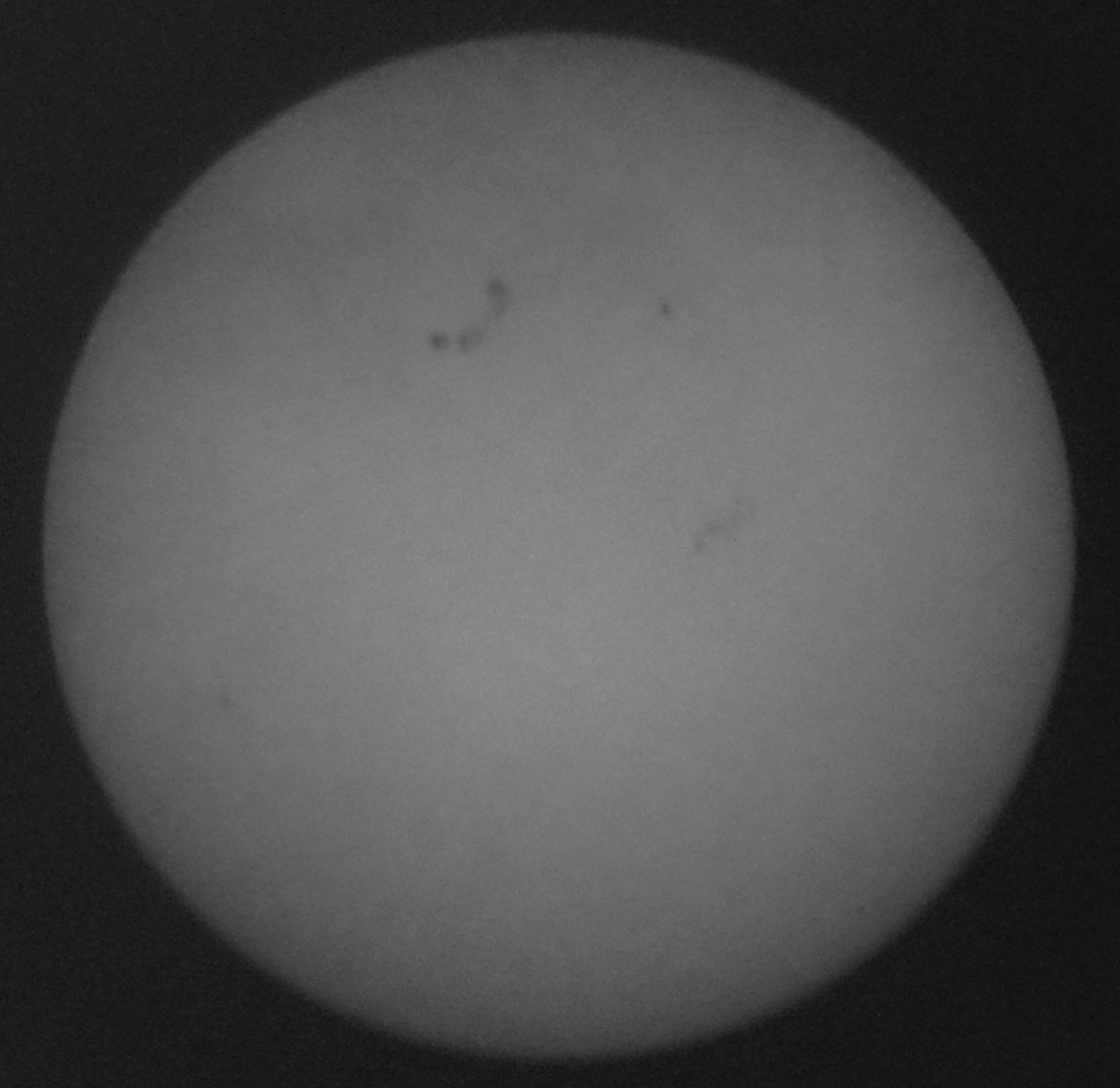


June 9th 0915 GMT Sun 

The Sun was quieter than recent periods. I took some full disc shots with my DSLR and Mak at my usual settings.


June 9th 2310 GMT Constellation Shoot 


I set my DSLR camera at 55mm focal length, ISO 3200 and 10 seconds exposure.

My first target was Lacerta to get a closer look than the weekend before.


Next was Sagitta, although it wasn't my intended target.


I caught a meteor amongst the Sagitta shots.


I then tried Scutum. I tried in vain. 

I was going to have another go at the Coathanger but found an interesting group of stars instead.


June 8th 1710 GMT Sun 


I hadn't nailed focus on my last two attempts to photograph the Sun with my DSLR alone. I prefocussed on some distant trees and hoped Alas! I did not nail focus this time either, although I caught some features.


June 7th 0610 GMT Sun 


I snapped the Sun with my DSLR at my usual settings. Again, I did not nail focus.


June 5th 0610 GMT Sun 


I snapped the Sun with my Mak and DSLR using my normal settings. I caught some sunspots but did not nail focus.


June 2nd 0800 GMT Sun 


I woke up to bright sunshine. There was only one thing to do. I took some full disc snaps of the Sun with my Mak and DSLR at my usual settings.


I tried using the WiFi electronic eyepiece but the practical issues of focusing in daylight were far more challenging than  expected. I would need to go back to the drawing board!

I then tried using my old Coronado Personal Telescope afocally. I started with my 12.5 mm Coronado eyepiece but found it difficult. I changed it for my 32mm Plossl eyepiece and took a few shots and hoped!

The first two images were taken with the 12,5mm eyepiece, one in red light, the other white, composed from green.


The last one was with the 32mm eyepiece. I tried stacking images but this did not work. The result was less than convincing but showed some structure.


June 2nd 2315 GMT Constellation Shoot 


I set my DSLR camera at 18mm focal length, ISO 1600 and 30 seconds exposure.


Firstly, I set the exposure to Bulb and aimed at the Pole Star for an exposure of several minutes. This resulted in some star trails.


Next was the real business of the night when I took several shots of the Plough with Arcturus.

Before I ran the stack, I caught a meteor just north of the cluster Melotte 111.


I caught the whole of Bootes and the small constellation of Cannes Venactici.


I then took some exposures of Hercules and Lyra. I also caught Corona Borealis.


June 1st 0010 GMT Constellation Shoot 


I went out with my DSLR and set it up with 18mm focal length, ISO 1600 and 30 seconds exposure. I started off my taking some dark frames.

 I took a few frames of the Summer Triangle, Lyra, Cygnus and Aquila.


I then attempted to photograph the small constellation of Lacerta.