October 31st 1205 GMT Sun
Conditions were quite poor, with a lot of moving cloud but I
was able to see two sunspots close together through my binoculars and filters.

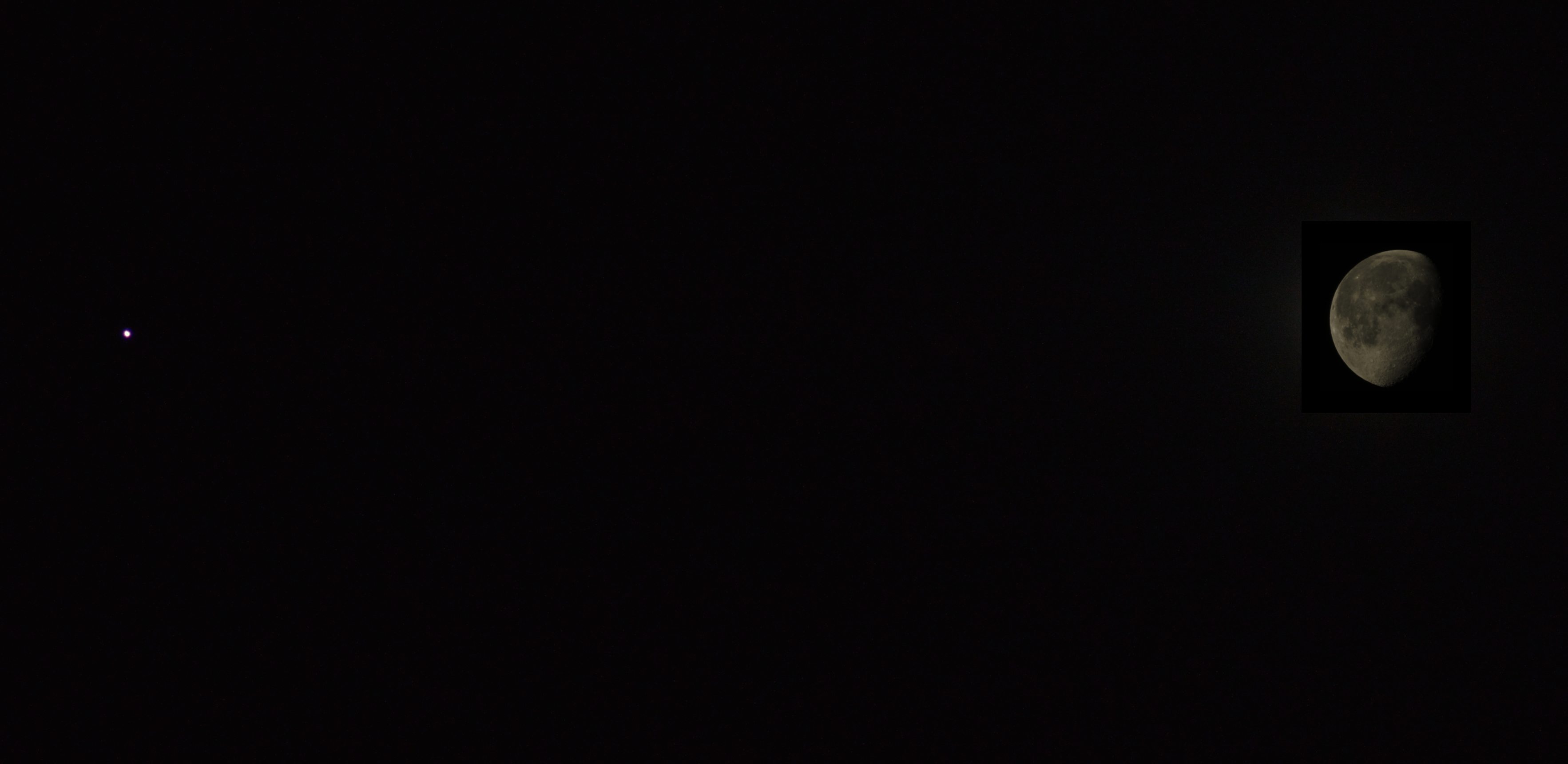
October 30th 2130 GMT Moon and Jupiter
The Moon and Jupiter were still quite close in the sky and I
photographed them with my phone camera.

October 30th 0930 GMT Sun
I snapped the Sun with my Mak and DSLR at my usual settings. Although I captured some sunspots, stacking could not remove the cloud from the image.

October 29th 2130 GMT Moon and Jupiter
I took a widefield shot of both objects at 70mm focal
length, ISO 800 and 1/50 second exposure.

I snapped the Moon at 1.54m focal length, ISO 100 and 1/1600
second exposure.

I ended with some Jupiter shots at 1.54m focal length, ISO 6400 and
1/3 second to try to catch some moons.

I then used my WiFi Electronic Eyepiece to take some lunar
closeups.


I took some Jupiter shots but the planet appeared too
bright, although I caught two moons.

I then did some DSLR shots at 1.54m focal length, ISO 100
and 1/250 second exposure.

I combined the Jupiter shot with one of its moons.

I combined this with the full disc lunar shot and a shot of the Moon with Jupiter.
October 26th 2030 GMT Moon
The Moon was nearly full and cloud was scattering its light
everywhere. I snapped it with my Mak and DSLR at 1.54m focal length, ISO 100
and 1/500 second exposure.

October 24th 1130 GMT Sun
It was supposed to be getting close to a solar maximum but a
binocular scan of the Sun, with my filters, suggested otherwise, with just a
single, small sunspot to report.

October 23rd 0610 GMT Venus
I snapped Venus with my DSLR at 300mm focal length and 1/200 second exposure. The disc was getting smaller to the point where only one photo was clear enough to see the phase.

October 22nd 1100 GMT Sun
As the sky cleared, I took another set of photos, stacked and processed them. Bingo!

October 22nd 0940 GMT Sun
There was some thin cloud around but I had a go at
photographing the Sun with my Mak and DSLR at 1.54m focal length, ISO 100 and
1/500 second exposure.
The stack did not work and the individual photos were too cloudy to be of use. Fortunately, the sky cleared later.
October 15th 0925 GMT Sun
It was a nice, bright autumn morning, ideal conditions for
photographing the Sun. I used my Mak, DSLR and filters at 1.54m focal length,
ISO 100 and 1/500 second exposure.

October 31st 1205 GMT Sun
Conditions were quite poor, with a lot of moving cloud but I
was able to see two sunspots close together through my binoculars and filters.

October 30th 2130 GMT Moon and Jupiter
The Moon and Jupiter were still quite close in the sky and I
photographed them with my phone camera.


October 29th 2130 GMT Moon and Jupiter
I took a widefield shot of both objects at 70mm focal
length, ISO 800 and 1/50 second exposure.

I snapped the Moon at 1.54m focal length, ISO 100 and 1/1600
second exposure.

I ended with some Jupiter shots at 1.54m focal length, ISO 6400 and
1/3 second to try to catch some moons.

I then used my WiFi Electronic Eyepiece to take some lunar closeups.


I took some Jupiter shots but the planet appeared too
bright, although I caught two moons.

I then did some DSLR shots at 1.54m focal length, ISO 100 and 1/250 second exposure.

I combined the Jupiter shot with one of its moons.

I combined this with the full disc lunar shot and a shot of the Moon with Jupiter.

October 26th 2030 GMT Moon
The Moon was nearly full and cloud was scattering its light
everywhere. I snapped it with my Mak and DSLR at 1.54m focal length, ISO 100
and 1/500 second exposure.

October 24th 1130 GMT Sun
It was supposed to be getting close to a solar maximum but a
binocular scan of the Sun, with my filters, suggested otherwise, with just a
single, small sunspot to report.

October 23rd 0610 GMT Venus
I snapped Venus with my DSLR at 300mm focal length and 1/200 second exposure. The disc was getting smaller to the point where only one photo was clear enough to see the phase.

October 22nd 1100 GMT Sun
As the sky cleared, I took another set of photos, stacked and processed them. Bingo!

October 22nd 0940 GMT Sun
There was some thin cloud around but I had a go at
photographing the Sun with my Mak and DSLR at 1.54m focal length, ISO 100 and
1/500 second exposure.
The stack did not work and the individual photos were too cloudy to be of use. Fortunately, the sky cleared later.
October 15th 0925 GMT Sun
It was a nice, bright autumn morning, ideal conditions for
photographing the Sun. I used my Mak, DSLR and filters at 1.54m focal length,
ISO 100 and 1/500 second exposure.

October 14th 2100 GMT Planets and Double Star
In contrast to the previous evening, I went for planets. I
attempted to capture Jupiter's and Saturn's moons at 1.54m focal length, ISO
6400 and 1/3 second exposure.


I then lowered the ISO setting to 100 and exposure to 1/25
second to try to capture planetary detail.


I then combined images to show the planets and their moons.


I was quite pleased with how Jupiter's moons came out. I caught the main cloud belts but nothing else on the planet. I had previously had better results with webcams.
I then went for the double star Gamma Arietis.

October 13th 2250 GMT Widefield Session
The sky was clear after a day of heavy rain. I started off
trying to catch Jupiter's moons with my DSLR at 300mm focal length, ISO 6400
and 2 seconds exposure.

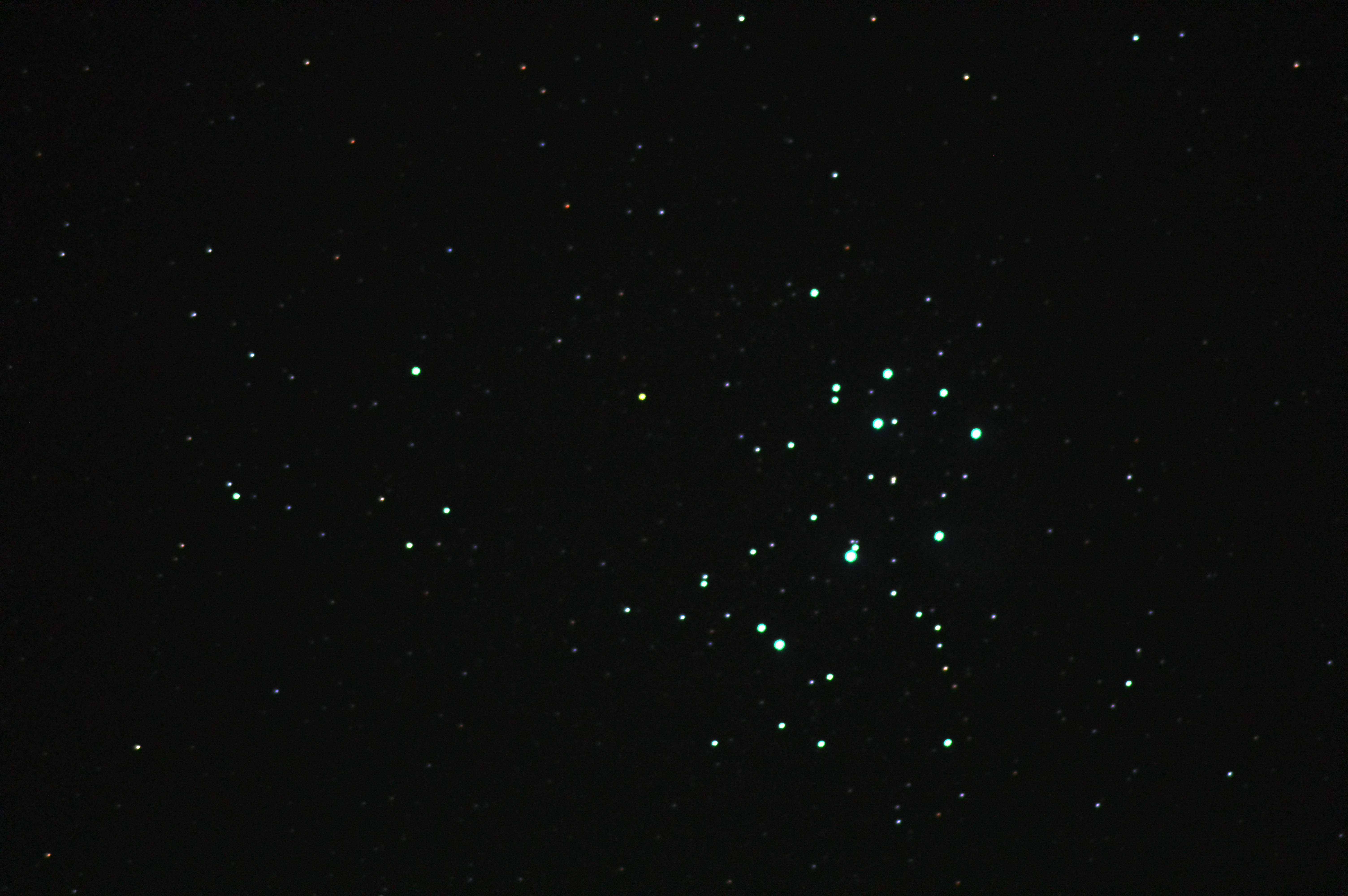
I repeated this for the Pleiades. I adjusted the focus.
I followed up with some more photos of Jupiter's moons. An attempted stack in Sequator obscured one of the moons but a single frame photo "nailed" the shot.


I changed the focal length to 70mm focal length and 8
seconds exposure.
I did some more Pleiades shots.

Next was the Hyades.

I had never caught the Crab Nebula on camera before but I had
a go anyway. I was not able to identify everything in the photo, so I needed to check my atlas. I saw 3 extended objects and a few apparent star clusters. My atlas suggested that the object near the top left was probably it.

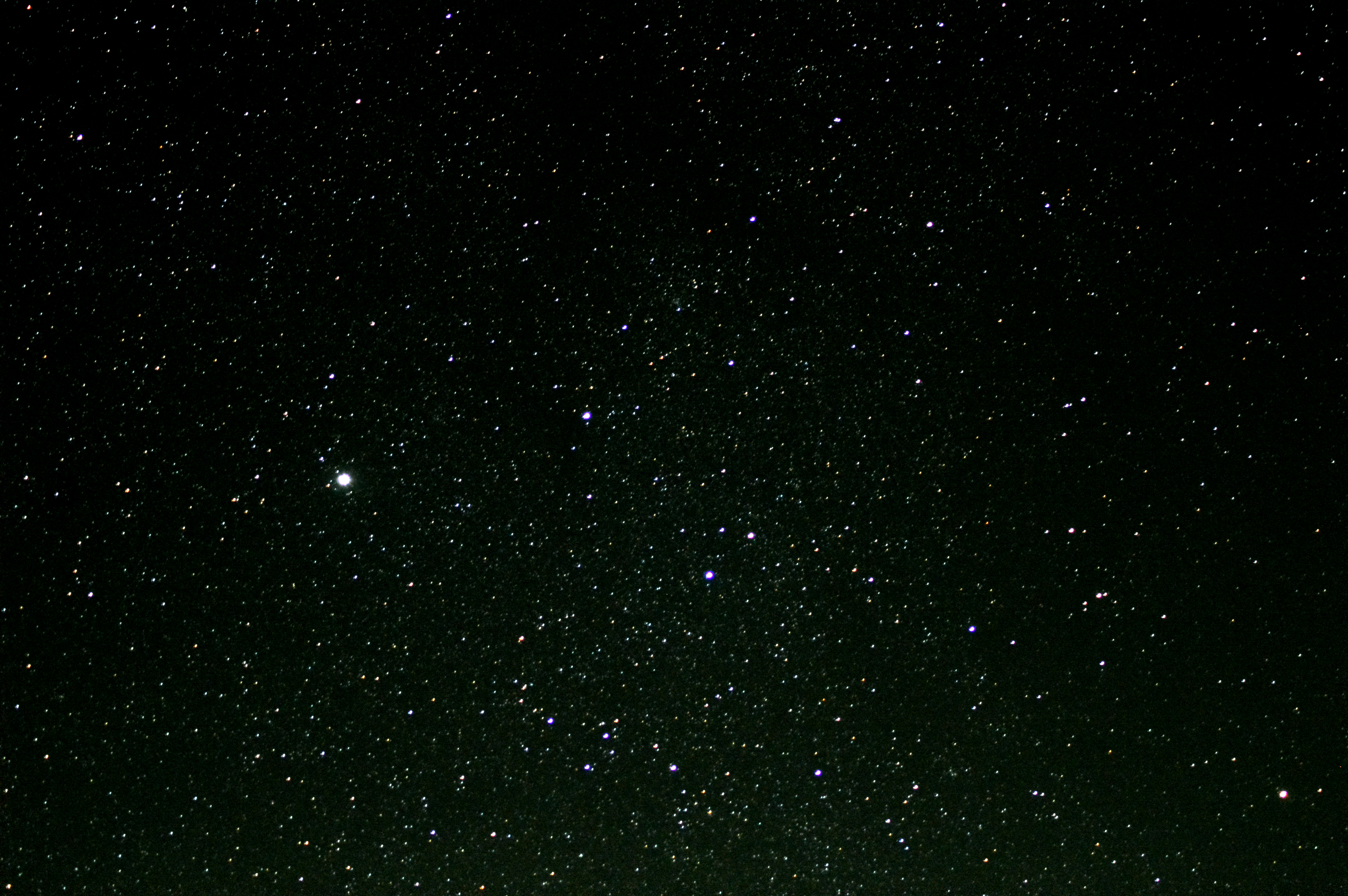
I finished with M37, perhaps a more realistic target. I think I might have lost the cluster in the stellar background. No, it turns out that I was aiming too far north! Nevertheless, it was an interesting star field.
I took some dark frames at 8 seconds followed by some at 2
seconds.
I cleaned up the backgrounds of the Hyades, Crab Nebula and both close-up and widefield Pleaides shots and adjusted exposure and darkness settings in GIMP.


October 10th 0545 GMT Moon and Venus
I snapped the Moon and Venus together with my DSLR at 70mm
focal length, ISO 100 and 1/50 second. I combined 5 images using Sequator and finished in GIMP.

I snapped each at 300mm focal length.


October 9th 1925 GMT Meteor Hunt
It was the last day of the Draconid shower. I set my camera to take photos using my usual settings and hoped.
At 1938 GMT I caught a bright meteor with a short trail near Vega. Due to the direction of travel, it was a non-shower meteor.

At 1947 GMT, I caught a meteor travelling in the right direction to be a true Draconid.


At 2026 GMT I caught a faint sporadic meteor with a short trail.


At 2036 GMT, I caught a faint Draconid meteor.


The final action of the evening was a shot of Jupiter's moons.

October 9th 1200 GMT Sun
I bin scanned the Sun in hazy conditions. I saw two sunspots close to rotating off the solar disc.

October 9th 0410 GMT Moon and Venus
I was awake early. I snapped the Moon and Venus separately
using my Mak and DSLR at 1.54m focal length. ISO 100 and 1/200 second exposure.


I then snapped them together with my DSLR at 35mm focal
length, ISO 100 and 1/40 second exposure. Unfortunately, I did not get a decent image.
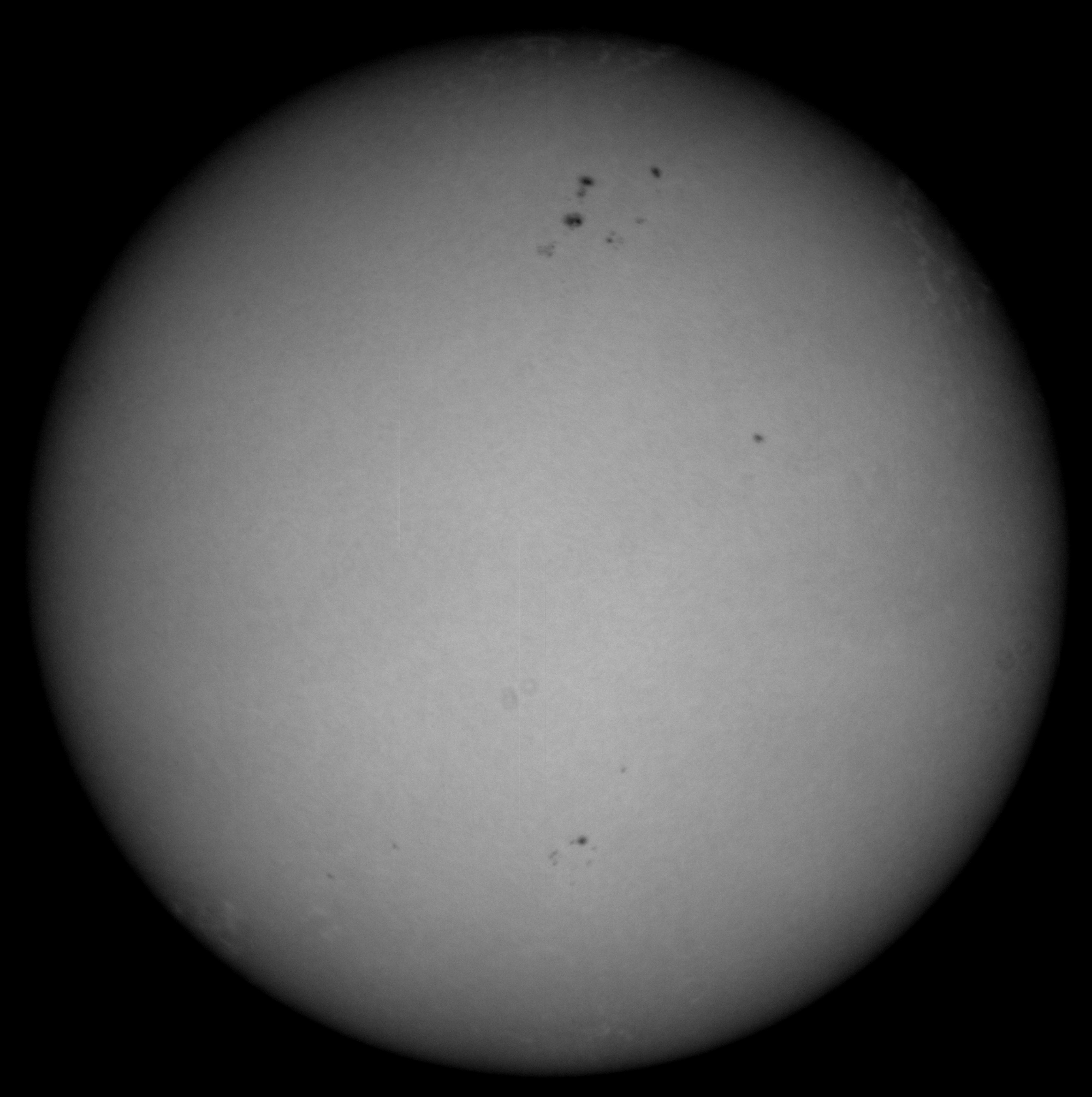
October 8th 0930 GMT Sun
Despite the favourable weather forecast for the period and
warm temperatures, there was lots of haze around. Nighttime conditions made
viewing and photography impossible and the day was little better. I used the
same telescope and camera settings as then morning before to capture the Sun.
October 7th 1110 GMT Sun

October 6th 0940 GMT Sun and Moon

I removed my solar filters and tried the Moon but thought
the haze had beaten me. Yes, I was right. I did not get a decent image.
I took some backup photos of the Moon with my DSLR at 300mm
focal length, ISO 400 and 1/500 second exposure. It was not a classic, iconic photo but I captured some details.

October 6th Venus Revisited Again
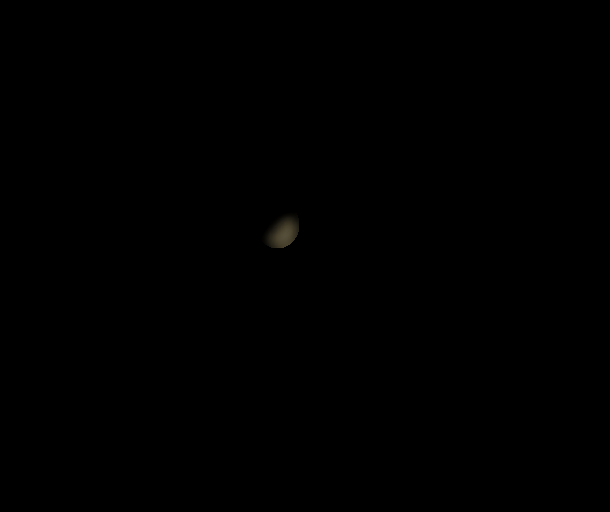
October 5th Venus Revisited

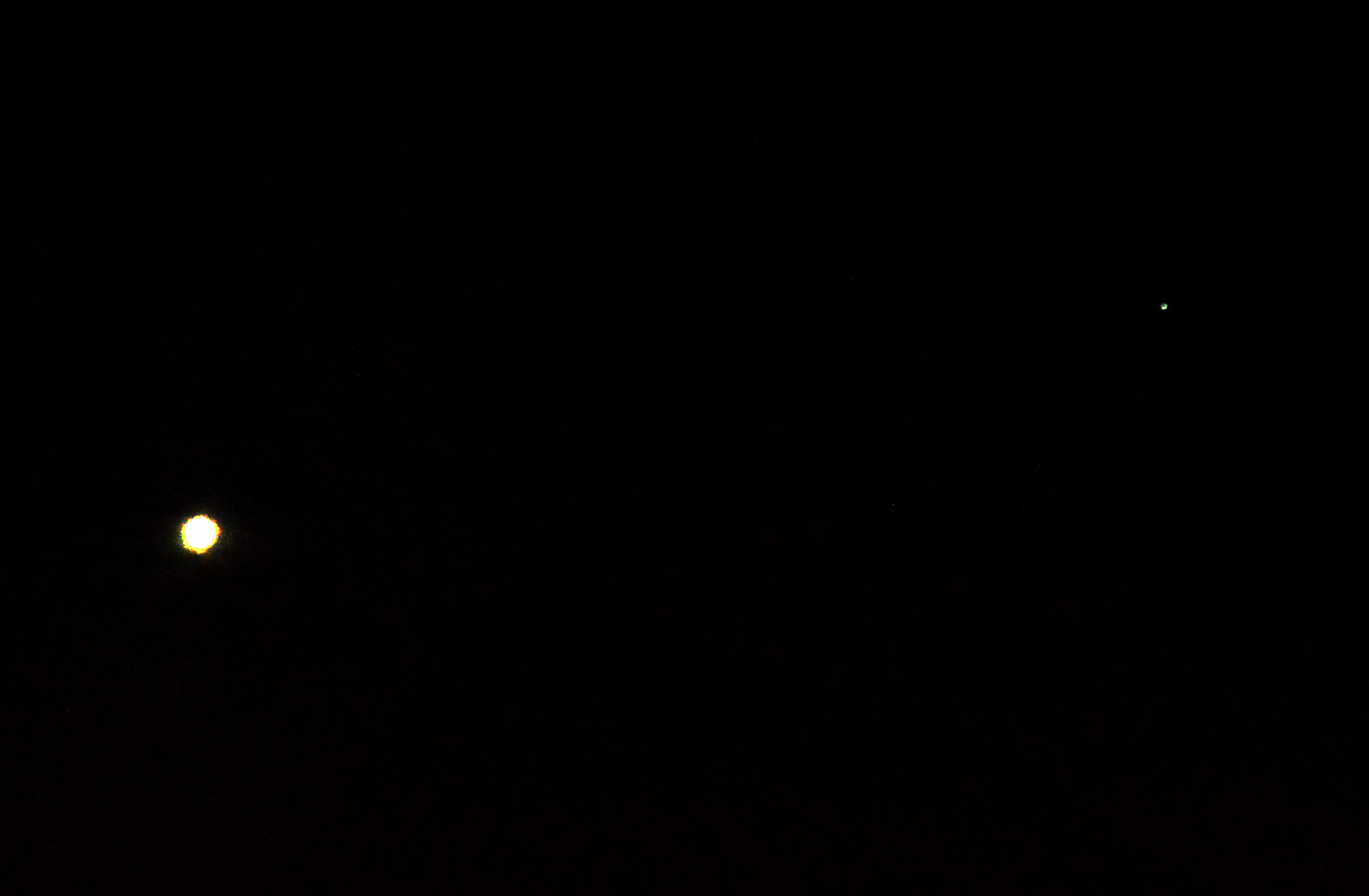
October 3rd 2150 GMT Moon and Jupiter
Conditions were very bad and only the Moon, Jupiter and Vega
were visible. Even the Moon was mostly obscured by cloud. I tried several
combinations of exposure times, ISO settings and focal lengths. 18mm focal length, ISO 6400 and 1/10 second exposure worked best.
October 3rd 1105 GMT Sun
I bin scanned the Sun under moving cloud conditions and saw
two sunspots near the edge of visibility in my binoculars.

October 3rd 0400 GMT Venus
I was woken by our dogs, so while they were out doing what
dogs do, I saw Venus. I snapped it with my DSLR at 300mm focal length, ISO 100
and 1/400th second exposure. Alas! All 16 images were out of focus.