Sunday, August 4, 2019

August 2019

August 26th 2225 GMT


I did a half-hour watch for Perseid meteors and took some constellation shots of the region hoping to catch one.


I saw one of about magnitude 2 travelling north east at 2243 GMT.

I caught a very short trail in this shot but it was definitely not a Perseid.


I combined 23 frames to obtain this shot of Cepheus.


I caught the constellation of Andromeda well but to remove the background glow, I lost the Andromeda Galaxy (M31).


August 24th 0000 GMT


I watched for Perseids for half an hour and took some photos of the area. I didn't think I caught any on camera but I saw four, three of which were Perseids. The brightest was a magnitude 1 sporadic. It was officially the last day of the shower but I was quite pleased with the ones I saw.

The first 3 frames stacked nicely for Perseus.


Frames 4 to 40 produced a nice Cassiopeia.


The final set of shots caught Cygnus nicely,


I finished with the Moon with my DSLR at 300mm focal length, ISO 100 and 1/200 second exposure.


August 23rd 2140 GMT


I looked in vain for a last minute Perseid. Conditions were rather poor, so I did not see any. I took some frames around Cassiopeia and Cygnus, just in case. They were ruined by poor focus and cloud but the first "sighter" showed Aquila, Delphinus and Sagitta.


April 23rd 1320 GMT


The Sun looked quiet, even in hydrogen alpha light but I took a few shots anyway.


August 20th 0400 GMT


It was dawn but the waning gibbous moon was high in the south west. I took some frames at 300mm focal length, ISO 100 and 1/400 second exposure.


August 14th 0115 GMT


Most of the sky was covered with cloud. I took some frames of the Moon at ISO 100, 300mm focal length and 1/1000 second exposure. Unfortunately, I could not extract anything useful from the frames.

August 13th 0100 GMT


Although I was well tired by this time, I went out for 20 minutes. It was much more clear and I aimed my cameras west of the radiant. I saw one bright meteor of about zero magnitude flash towards Taurus. I was feeling rather philosophical, wondering how many more times I would see the Perseid shower before I die. It was not just how many years I would live but also weather.

OK here's Perseus again. No meteors.


No meteors but the Konica Minolta produced the best Perseus shots.


August 13th 2300 GMT


Conditions had cleared but I still needed to move the cameras to catch what clear sky was available in the east and north east. I saw 7 Perseid meteors of which four were brighter than Jupiter with the brightest being about magnitude -6. Without having any evidence, that estimate equalled a sporadic meteor that I had seen in Dusseldorf in 2013. The bright ones came in quick succession between 2330 GMT and 2336 GMT.

A quick look through the camera images showed that I caught one fireball on camera and one about magnitude 1 that I did not spot visually.

An hour later, more cloud came in and I was feeling cold.

I created a photo from the first set of frames of Perseus.
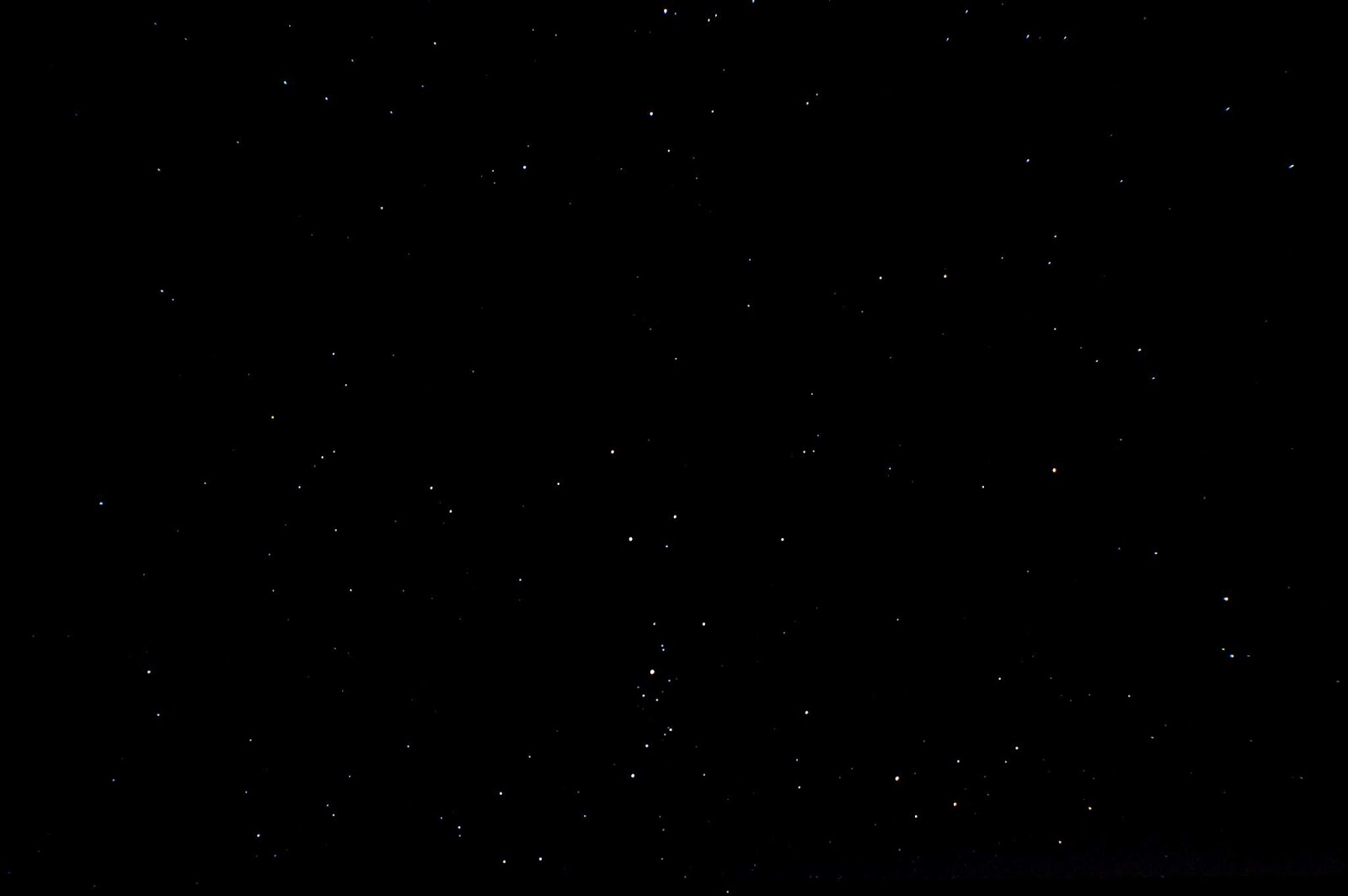


I caught a Perseid near Cassiopeia.
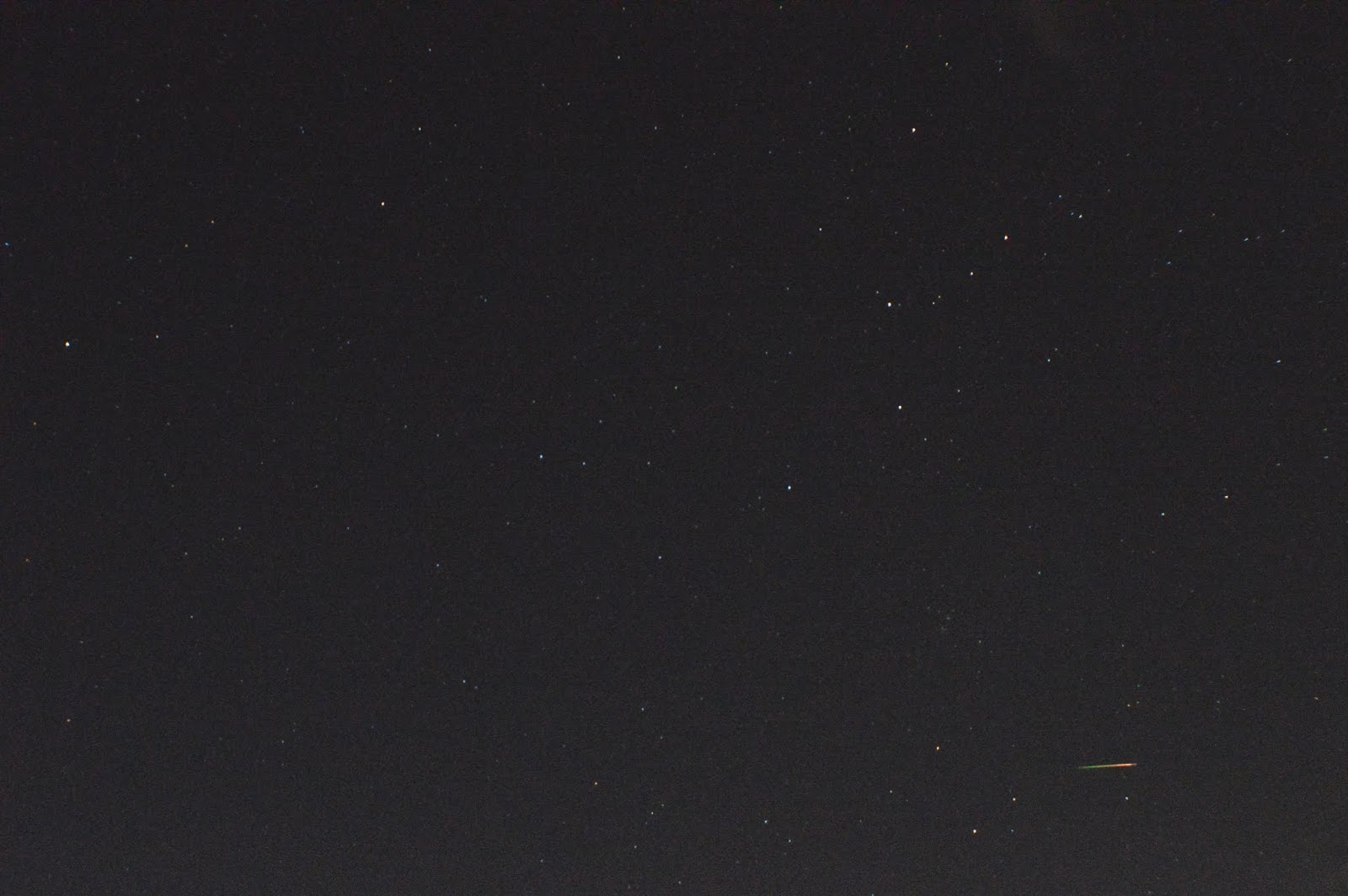


When I moved to Ursa Minor, I did not catch any meteors but got one of my better shots of the constellation.


Similar for Cassiopeia.


Back to Perseus.


The space between Perseus and Cassiopeia contains  shower radiant.


I finished with no more meteors and Perseus.


I found a bright fireball on the images from the antique Konica Minolta.


August 12th 2100 GMT


I went out armed with my Nikon D3200 at my meteor detecting setting of 16mm focal length, ISO 6400 and 8 seconds exposure. I used my antique Konica Minolta DSLR at 18mm focal length, ISO 3200 (all it goes up to!!) and 8 seconds exposure. The plan was to have one camera taking photos while the other developed the photo just taken. Once I got the rhythm, I was getting only short gaps between shots.

Unfortunately, I did not see any meteors and it clouded over completely by 2125 GMT. Rain soon followed! I could not use any images for constellation shots, due to twilight and cloud.

August 12th 1410 GMT


The Sun was quiet in hydrogen alpha light but I was at home and there was a period of clear sky between the showers. I took a few shots with my PST and DSLR just in case. I actually caught some minor detail.


August 10th 2120 GMT


The moon was waxing gibbous and I took some frames with my DSLR at 300mm focal length, ISO 400 and 1/4000 second exposure.


I then tried a video recording of the Perseid shower by aiming my camera at Cassiopeia, again! It failed miserably!

August 7th 2100 GMT


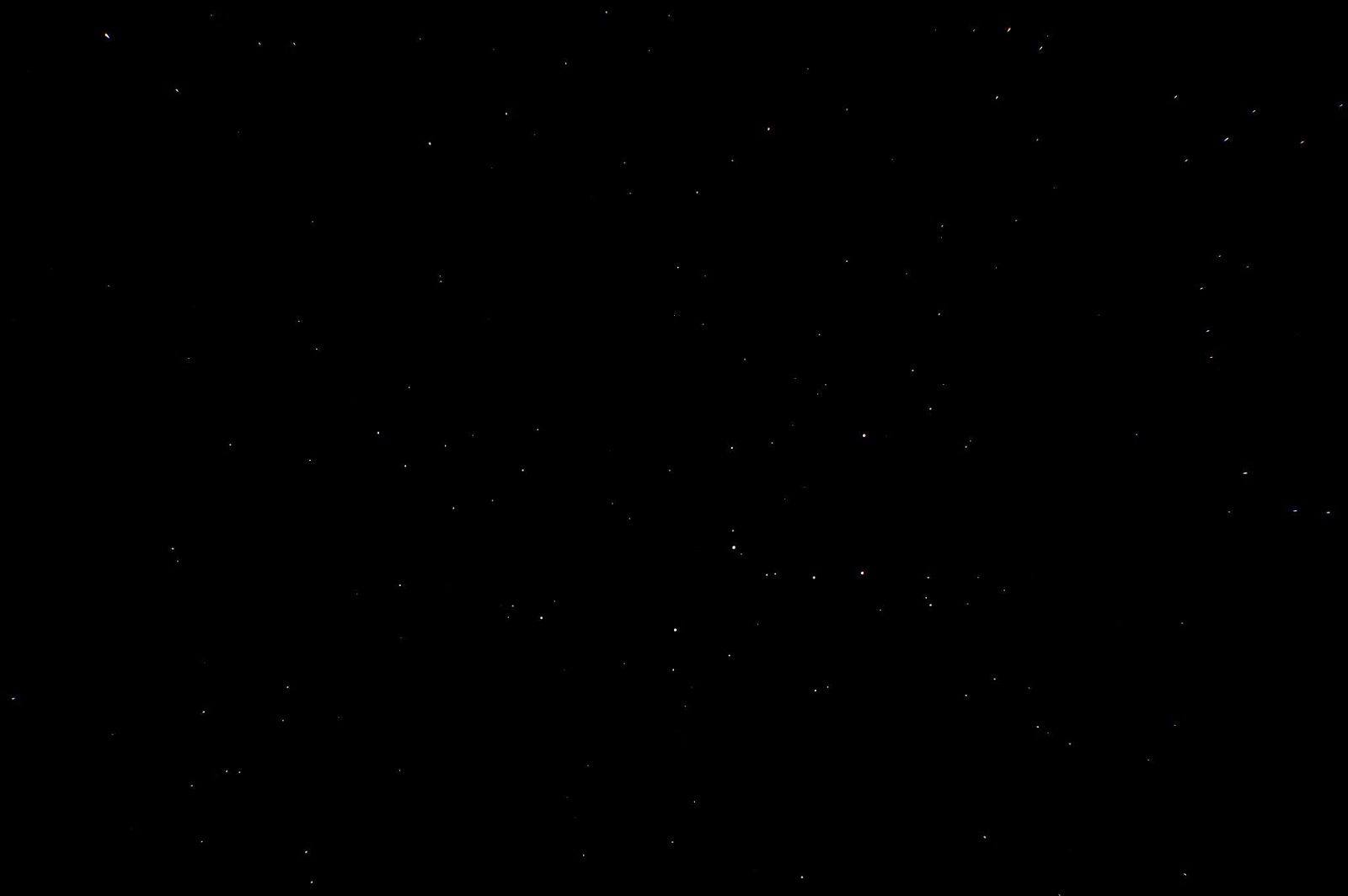
I had a short session looking for Perseid meteors. I saw a bight (mag 0) one at 2117GMT but did not catch it on camera. Early indications were that I caught a few stars. I stacked the best 20 images to get another image of Cassiopeia.

August 7th 2015 GMT


The Moon was above a cloudless horizon and I took a few frames at the same settings as the evening before.


Aug 6th 2100 GMT

I took some frames of the Moon with my DSLR at 300mm focal length, ISO 100 and 1/400 second exposure.


Aug 3rd 2240 GMT


I had been checking the sky from early evening and, finally, there were some clear patches. As you might expect, I ignored Jupiter and Saturn and went for meteors. I saw a bright one at 2255 GMT flash below Cassiopeia.

However, as the cloud was moving, I aimed my camera in various directions to catch the clearer bits of sky. I used 16mm focal length, ISO 6400 and 8 seconds exposure and too some dark frames after I finished the shoot.

I did not see any Perseids but caught a sporadic meteor near Hercules.


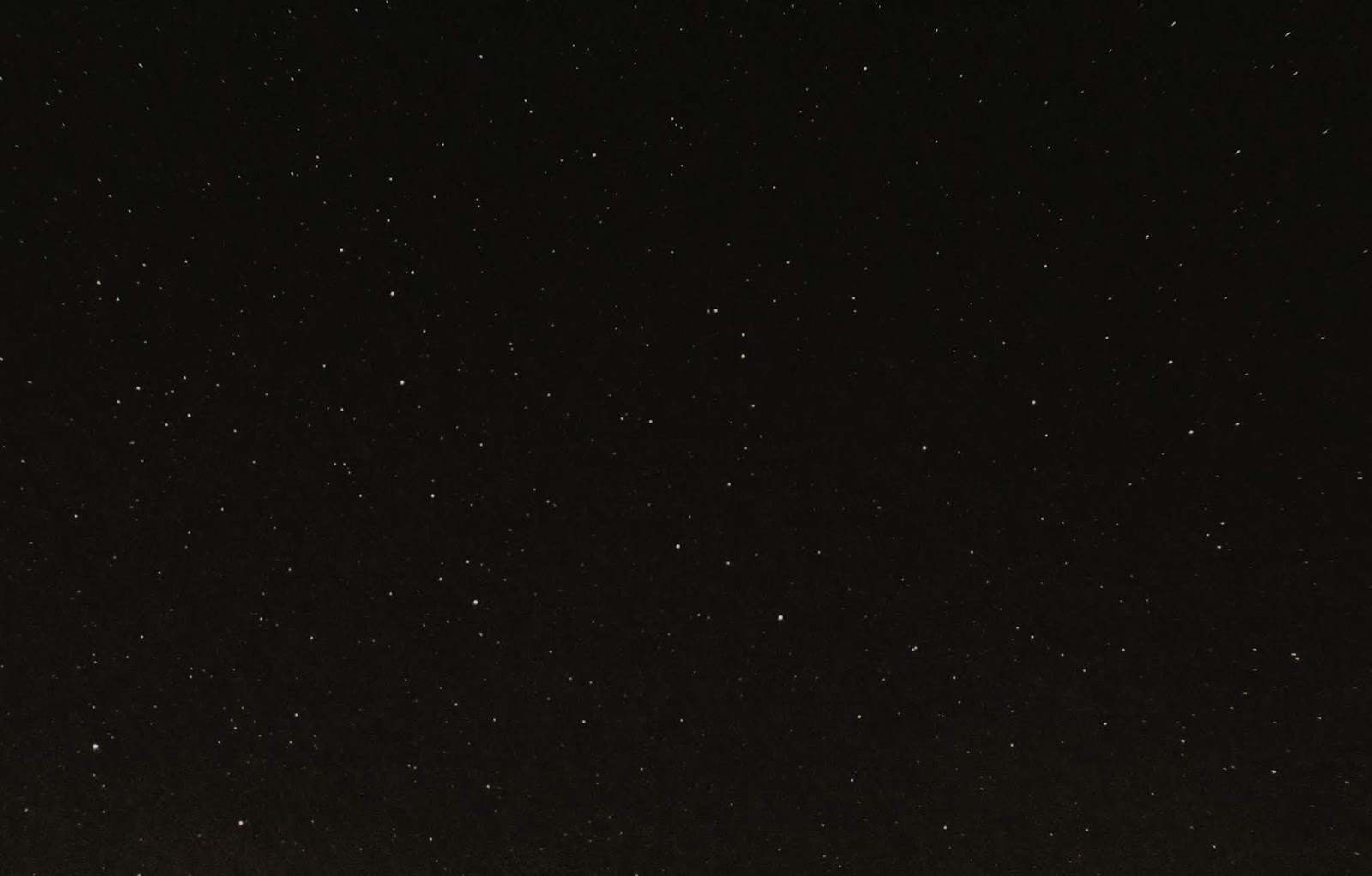
My first set of frames showed Cepheus.


The second showed Cassiopeia.

The third showed Hercules.
The fourth showed Cygnus and Lyra, with Sagltta and the Coathanger asterism near the bottom.
The fifth was aimed at Pegasus but was too near the horizon and a streetlight.

The sixth caught Ursa Minor.

The seventh and final shot was another of Cassiopeia.

Wednesday, July 3, 2019

July 2019

July 31st 2140 GMT


I checked for Perseid and other meteors until 2200 GMT, as I had work the next day. I did not see any but had my camera aimed at Cassiopeia at 16mm focal length, ISO 6400 and 8 seconds exposure. However, the 52 frames of Cassiopeia stacked nicely.


July 29th 2300 GMT


Most of the sky was covered by cloud but I decided to see if I could catch a meteor on camera. I set my DSLR at 16mm focal length, ISO 6400 and 8 seconds exposure.

After half an hour, I had not seen any meteors in the direction of Perseus and Cassiopeia and conditions had become even worse.

Despite the awful conditions, I caught Perseus and an aircraft trail.


July 24th 2135 GMT


I took some shots of Jupiter at 300mm focal length, ISO 6400 and 1 second exposure.


July 24th 1430 GMT


I checked the Sun in hydrogen alpha light with my PST and DSLR. It seemed very quiet.


July 24th 0935 GMT

I snapped the Moon using the same settings as the day before.

July 23rd 0620 GMT


Before leaving for work, I took some shots of the Moon with my DSLR at 300mm  focal length, ISO 400 and 1/1000 second exposures.


July 21st 2200 GMT

I was hoping to capture Jupiter using my Mak, DSLR and webcam. My first set of frames attempted to capture the moons with my Mak and DSLR. They failed, mostly because I didn't have a remote shutter release.

My next set of frames captured the equatorial cloud belts but words like great, iconic and awe-inspiring did not apply.


I did two imaging runs with my Bresser Electronic Eyepiece but neither worked. Cloud did not help but extinction was also an issue. My attempts with my DSLR and 3x Barlow lens did not reveal anything either!        

July 21st 2345 GMT


I was originally thinking about a session with my Mak and Bresser Electronic Eyepiece but my back was playing up a bit and I was tired from working.

I took some frames of the Moon at ISO400, 300mm focal length and 1/1000 second exposure, with my DSLR. I then used 1 second exposure for Jupiter's moons.The Jupiter shots did not work.


I came back indoors and changed lenses to attempt to capture meteors, as the Perseid shower was near its start. I saw one at 0005 GMT and a couple of sporadic meteors at 0010 GMT. Although I stayed out for another half hour, I did not see any more, although I saw a pass of the International Space Station.


I used 16mm focal length, ISO 6400 and 6 seconds exposure, aiming my camera at Cassiopeia.

I caught a very short trail below the right side of the W of Cassiopeia.


As a by-product, I processed the frames to get a photo of Cassiopeia.


July 18th


I installed Sharpcap 2.9 on my computer and ran some stability tests with my Bresser Electronic Eyepiece. Naturally, although they worked, I was wondering what might happen when I would try to image the Moon or a planet.

July 16th 2108 GMT

It was the evening of the lunar eclipse. After a lot of experimentation, I settled on an exposure time of 1/100 second, ISO 400 with my DSLR at 300mm. I also took some frames of Jupiter, hoping to catch the moons. Conditions were quite poor, with lots of haze.


I took some more shots at 2130 GMT. I was pleased with the photo.


At 2145 GMT, I could still see the Moon but conditions were more hazy.


At 2200 GMT, part of the lunar disc was obscured by cloud. I did not get any useful shots until 2230 GMT.


At 2345 GMT, the shadow had receded.


Just before local midnight, Earth's shadow was about to leave the lunar disc.


July 15th 2100 GMT

I took some snaps of the Moon and separate snaps of Jupiter with the usual camera settings.


July 15th 1210 GMT

I checked the Sun in hydrogen alpha light and it appeared to show some minor activity around the limbs. Underwhelming was the best word to describe the Sun at the time.


July 14th 2215 GMT


The moon was waxing gibbous and its haze was obscuring nearly all of the stars. I took some snaps of the Moon, Jupiter and Saturn with my Mak and DSLR. I originally intended to use my Bresser Electronic Eyepiece but I was having problems re-installing software on my PC.

After some experimentation, I settled on 1,54m focal length, ISO 100 and 1/1000 second exposure.on the full lunar disc.

I then used a 3x Barlow lens to deliver a focal length of 4.62m and adjusted the exposure to 1/300 second. I did several imaging runs.


I did several shots of Jupiter but it was an over-exposed frame that led to my best result of the year (so far).


Similarly, for Saturn,


I did not catch Titan "on film" but captures three of Jupiter's moons, so I combined the photo with the one of Jupiter to achieve the image below.


July 13th 2140 GMT


It had been cloudy for most of the day but it was almost clear near the Moon. Jupiter was nearby. Although I caught the two objects close together, I could not capture Jupiter's moons in the Moon's glare.

One of the early frames caught both.


This was the best of the Moon shots.


Jupiter showed quite well in later frames, so I combined one with the Moon shot, above, to produce this:


I had bad focus and Jupiter's moons were lost in our moon's glare. so that was the final image.

July 12th 2145 GMT


The sky was partially clear. I took some photos of the Moon at ISO 400 300mm focal length and 1/4000 second exposure.


I took some frames of Jupiter's moons at ISO 6400 300mm focal length and 1 second exposure.


July 8th 2100 GMT

I used the same settings as the evening before to snap the Moon.


July 7th 2100 GMT


The Moon was about four days past new and a few features were visible in its crescent phase.

I took a set of shots at 1.54m focal length, ISO 100 and 1/100 second exposure.


I took further sets of shots at 4.62m focal length, ISO 400 and 1/50 second exposure, after a lot of fiddling. Unfortunately, I didn't get focus.

July 7th 1500 GMT


The Sun was high and the Big Bear images showed a plage and some filaments. I did not see anything with my PST but took a few photos in the hope of detecting something.


July 5th 2030 GMT


I took some photos of the thin crescent moon at 300mm focal length, ISO 6400 and 1/4000 second.


July 3rd 2130 GMT


I snapped Jupiter's moons using the usual settings. As it was still twilight, I processed the image by removing the red and blue channels and enhanced the contrast. I caught some background stars.


July 1st 2310 GMT


There were several minor meteor showers active in the south eastern sky. I saw a faint meteor from one of the two Aquilid showers travelling north at about 3rd magnitude.

Photographic conditions started well enough but cloud spread from the north, ending the session prematurely. I took several series of frames at 16mm focal length, ISO 6400 and 6 seconds exposure. This was aimed primarily at meteor photography but I sometimes obtain some constellation shots as a by-product.

First was Aquila with Sagitta and Delphinus and at least part of Vulpecula.


The second photo also caught Sagitta but most of the area was covered by Cygnus. I caught Vulpecula and recognised the Coathanger.